

For anyone who is concerned about... "Raised scars" หรือ "Keloid" Whether it's on the ears, shoulders, chest, or other areas of the body, it can cause itching, pain, or a loss of confidence in one's appearance. D' Lovevery ClinicD' Lovevery Clinic) I understand this problem very well.
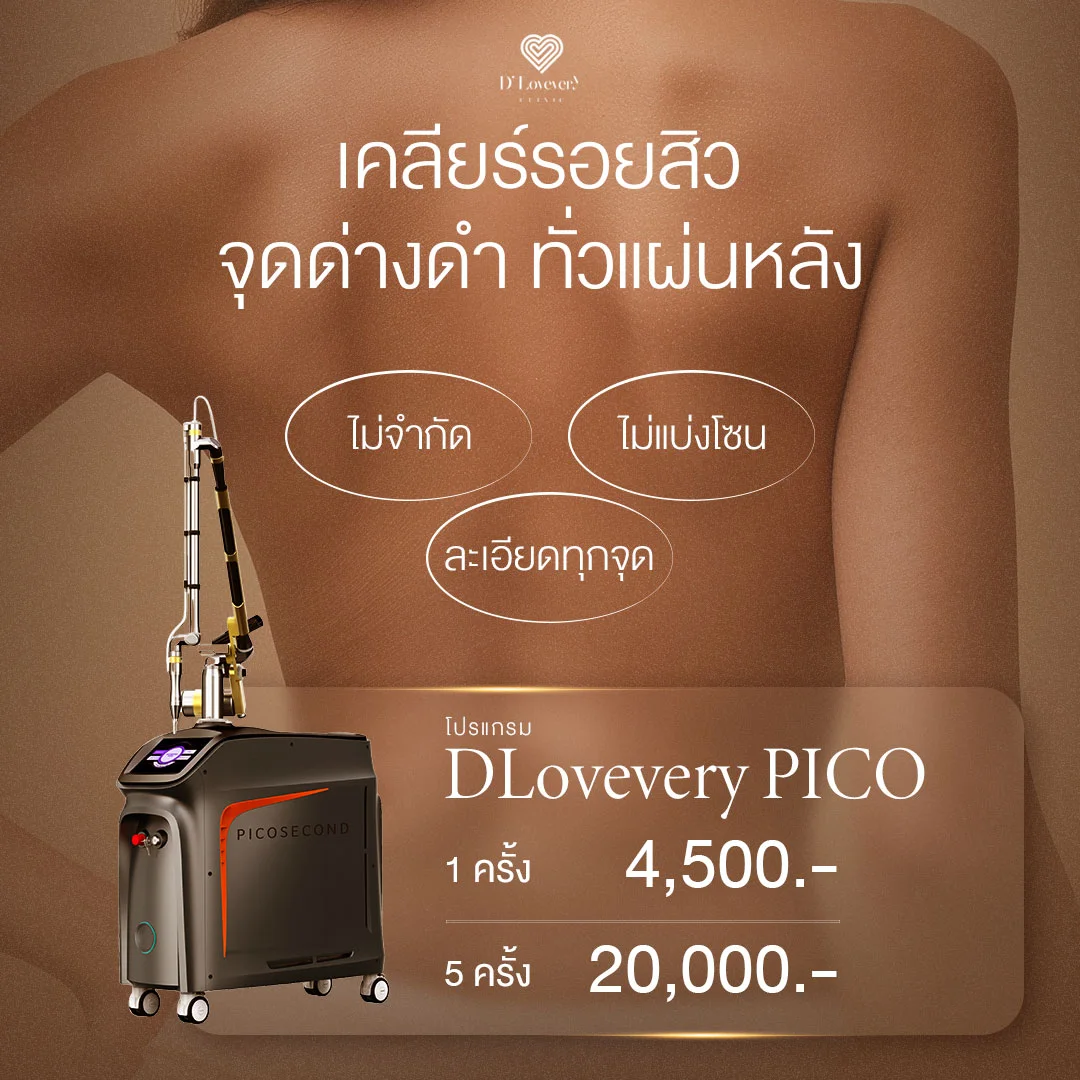
We offer a combination therapy program that addresses everything from tumor reduction and cosmetic surgery to skin tone improvement with Pico Laser for the best results and to minimize recurrence.
Let's get to know "keloids": What are they? How do they differ from regular raised scars?
Before starting treatment, the doctor wants the patient to understand the nature of this type of wound in order to plan the correct treatment.
- Hypertrophic scars: It is a raised scar that protrudes from the normal skin, but the boundaries of the scar will... "Not expanding" A lump extending beyond the original scar usually occurs about a month after the wound has healed and may subside on its own over time.
- Keloid: It's an abnormality in the wound healing process where the body produces excessive amounts of collagen, causing the wound to heal. "Enlarged beyond the original mark." It spreads further, has a hard, shiny texture, and is often itchy or painful. It cannot collapse on its own. She needs medical treatment.

Causes and risk factors of keloids.
Keloids are most often caused by genetics; a family history of keloids increases the likelihood of developing them. They can also be caused by skin tension in various areas, such as the chest, shoulders, earlobes (from piercings, surgery), or even large, inflamed pimples.
pie title "รอยแผลนูน/คีลอยด์" มากที่สุด
    "อันดับ 1: บริเวณแขน (เห็นชัดไม่มั่นใจ)" : 40
    "อันดับ 2: รอยผ่าคลอด (ไม่สวยงาม)" : 30
    "อันดับ 3: บริเวณขา" : 20
    "อันดับ 4: จุดอื่นๆบนใบหน้า/ใต้ร่มผ้า" : 10
อ้างอิงคนไข้D' Lovevery Clinic ตั้งแต่ปี 2023-2026A comprehensive approach to keloid treatment at D' Lovevery Clinic.
At D' Lovevery Clinic We don't use a one-size-fits-all approach to treat everyone. Instead, we assess the characteristics of the lesion, its size, hardness, and duration to create an individualized treatment plan. This process is divided into three main steps:
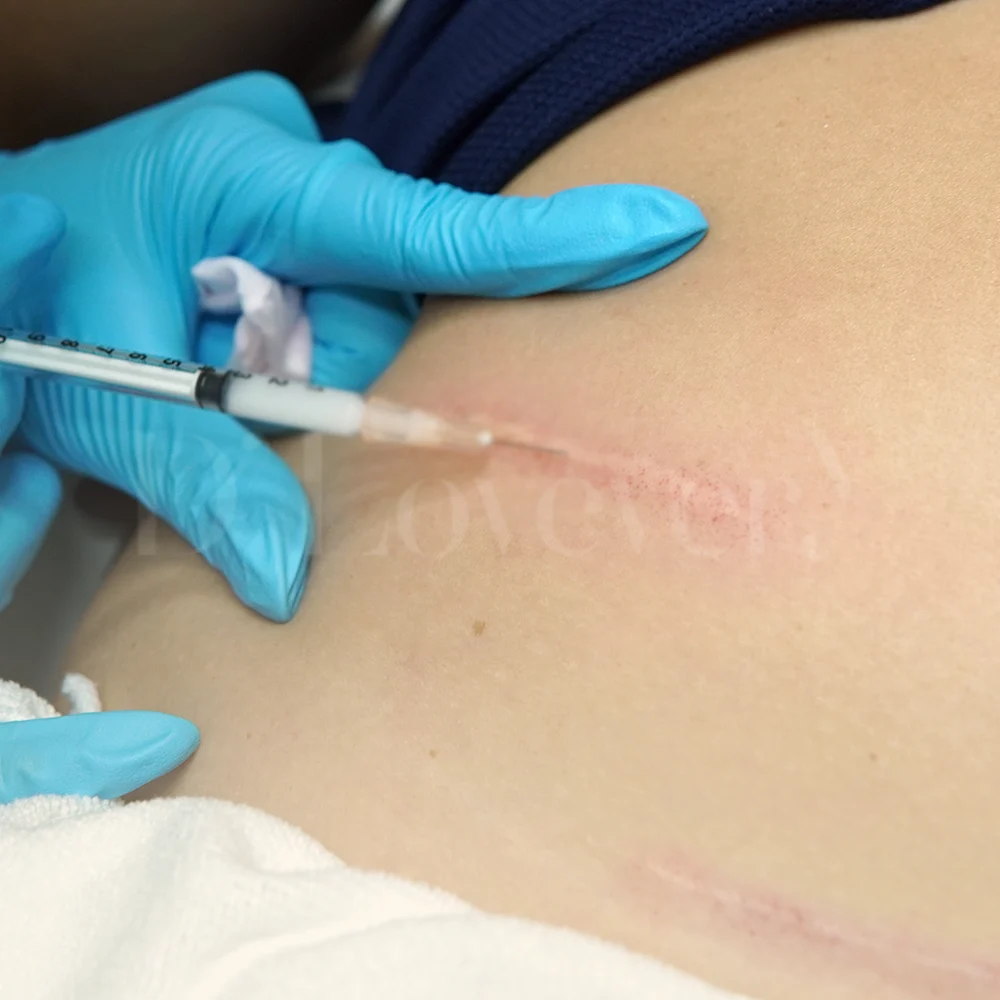
1. Intralesional Corticosteroid Injection (to dissolve keloids)
This is the most popular and standard method, and it shows noticeable results for small to medium-sized keloids.
- Principle: The medication inhibits the function of fibroblast cells and enzymes that break down excess collagen, causing lumps or bumps. "Softens and flattens out."
- frequency: It is recommended to continue this treatment every 2-4 weeks until the scar is flat and even with the skin.
2. Keloid Excision Surgery
For the case where The mass is very large. หรือ I've had injections before, but the swelling didn't go down. Or, if it's an old keloid that has hardened into a lump, surgery would be the appropriate option.
- Special effects: The medical team will use a tension-free closure technique to prevent the scar from becoming raised again, which is a key aspect of keloid surgery.
- Ongoing care: After surgery, your doctor may consider prescribing medication to prevent recurrence immediately, or scheduling close monitoring.
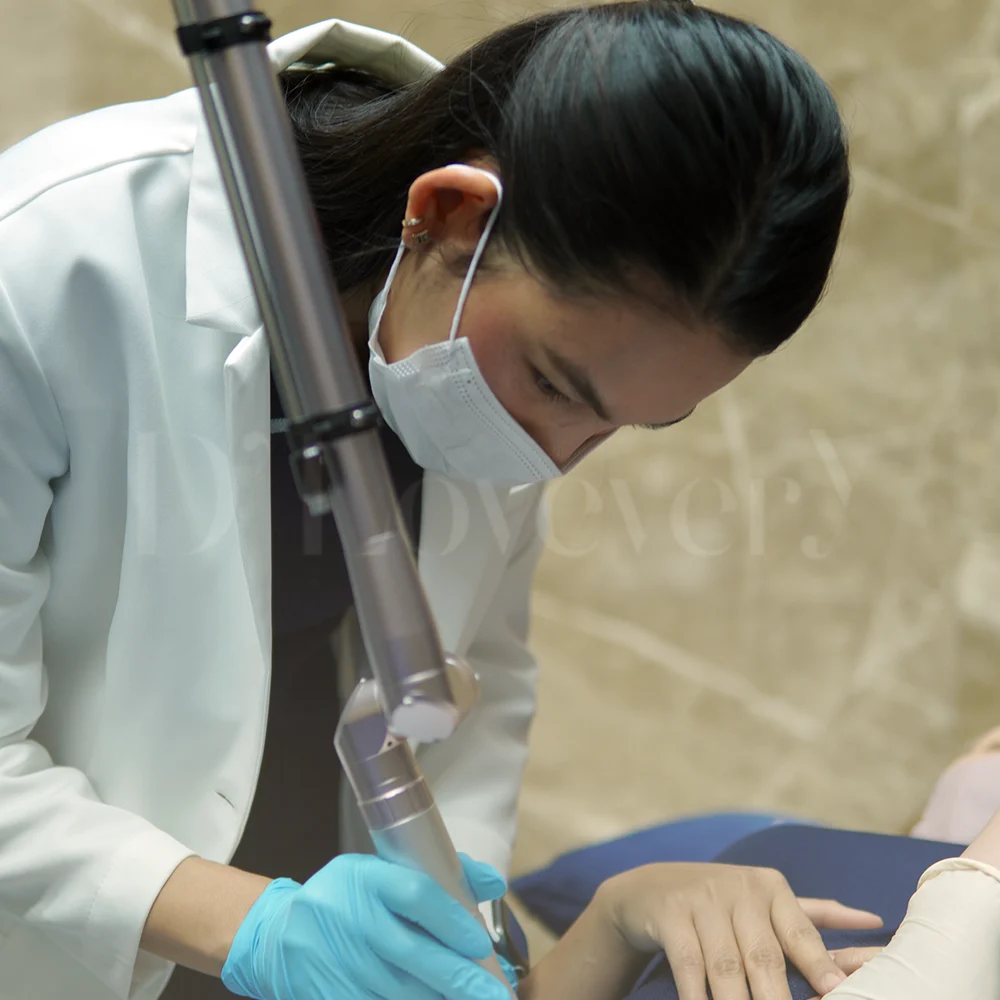
3. Skin tone and scar removal with Pico Laser.
Once the scar has healed and become smooth, the problem that often remains is... "Red marks or dark spots" Or visible capillaries, which make the skin look uneven.
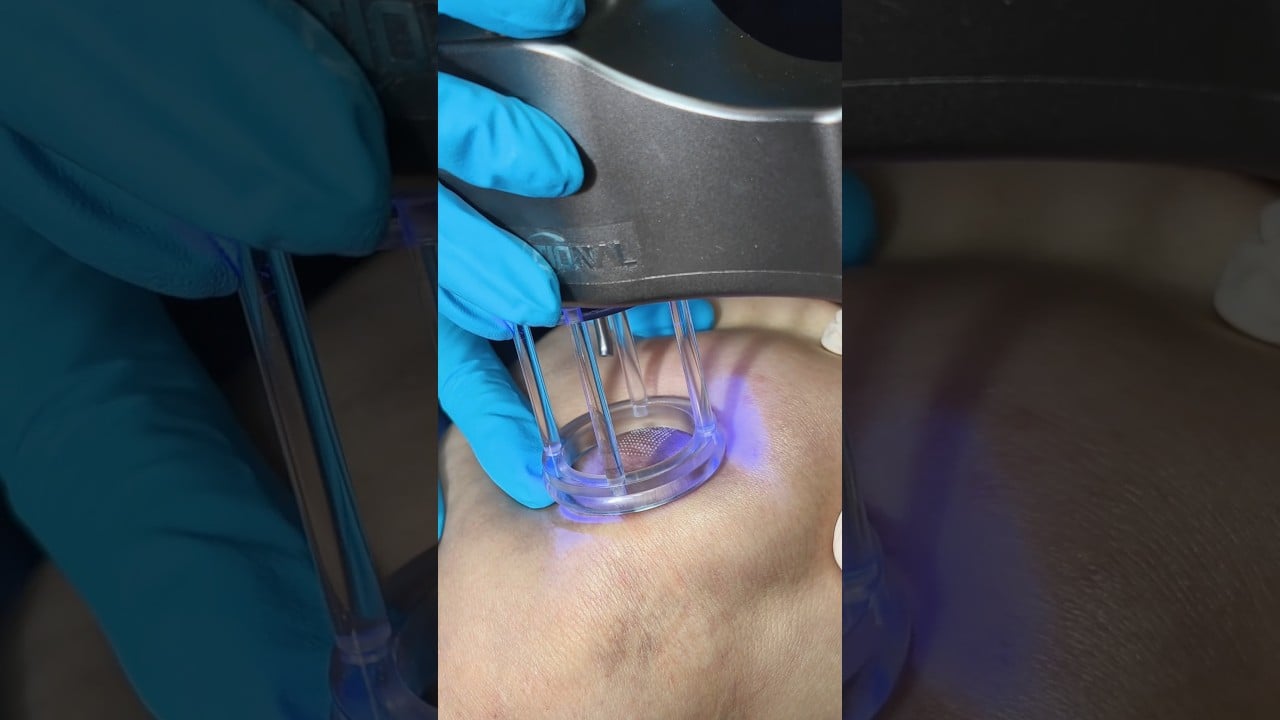
- Pico Laser: Laser technology delivers high energy in short, picosecond bursts to destroy abnormal pigments and stimulate the production of new, beautifully arranged collagen. This reduces the appearance of scars and creates a more even skin tone, making it closer to normal skin.
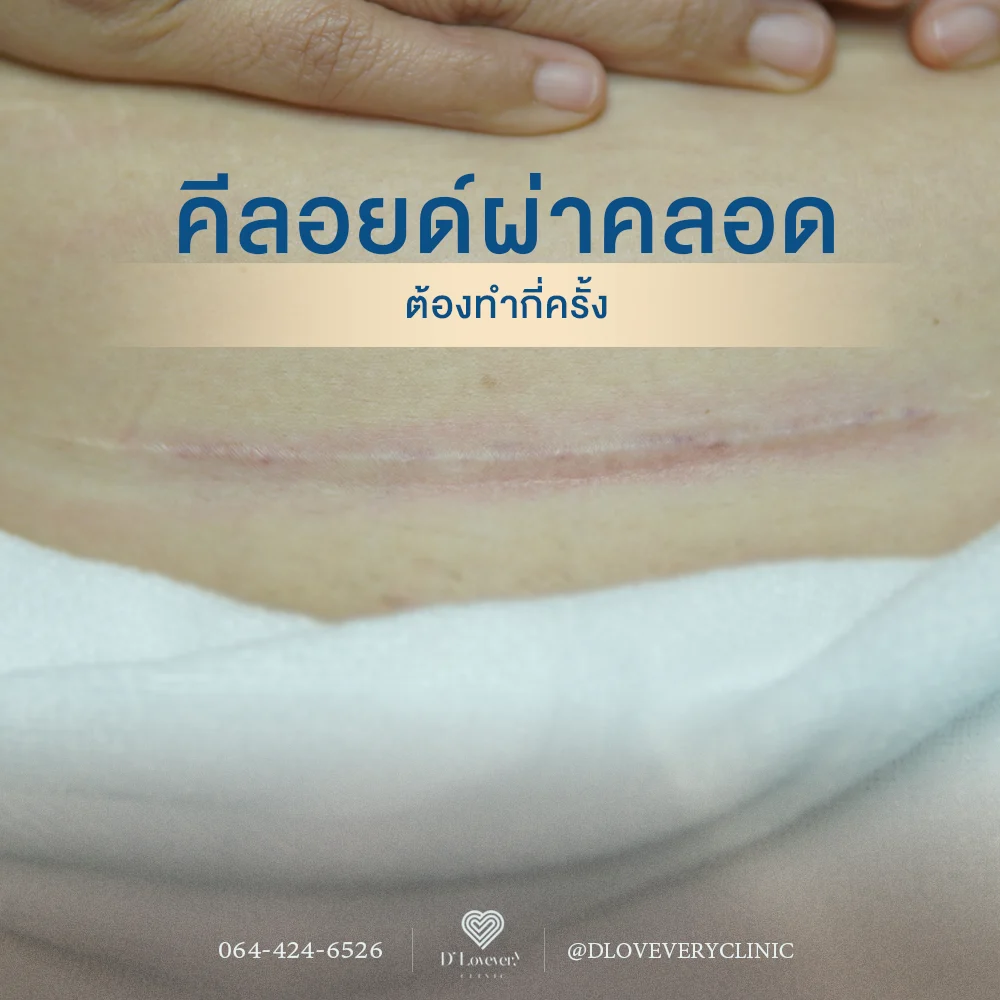
What can the color of a keloid tell us?
| Color of the wound | Meaning / Status of a wound | Recommended treatment guidelines |
|---|---|---|
| 🔴 Bright red / Dark pink | "Active Stage" • The wound is highly inflamed. • It has many blood vessels supplying it. • Warning signal: The lump is growing or expanding. • Often accompanied by itching or pain. | Seek immediate treatment! Focus on Dissolving injection To stop the growth and reduce inflammation as quickly as possible. |
| 🟣 Dark purple / Burgundy | "Highly Active" phase • Capillaries dilate significantly. • The wound is under high tension. • The skin in that area is thin and fragile. | It requires special care. Focus on size reduction injections combined with other procedures. Vascular Laser (Laser treatment to reduce redness) to destroy the blood vessels supplying the tumor. |
| 🟤 Brown / Dark Black | "Stable phase + leaves a mark" (Hyperpigmentation) • The inflammation has subsided, and the lump may stop growing. • The body produces and accumulates too much melanin pigment. • Often caused by old wounds that have been present for a long time. | Focus on evening out skin tone. If the lump has subsided, we recommend doing the following: Pico Laser To break down and fade dark pigments, resulting in a more even skin tone. |
| ⚪ Pale white / Beige | "Mature Scar" • Wound growth has stopped (Inactive) • The connective tissue becomes tight and hard. • There is no longer a blood supply. | The most difficult to treat. It may require... Plastic surgery Or, it can be combined with injections and laser skin resurfacing to soften the skin. |
What criteria do doctors use to determine whether an injection is needed or surgery is required?
| Criteria | ✅ Suitable for "injection" (dissolving/dissolving). | ✂️ Suitable for "surgery". |
|---|---|---|
| 1. Size of the lump. | Small to medium-sized lumps. (Base width no more than 1-2 cm.) | A very large lump, a giant lump. Or a dangling lump (such as on the earlobe). |
| 2. Scarring (or hardness of the wound). | Soft or somewhat flexible. (The medication can penetrate the tissue.) | Hard as a rock, rigid as a stone. (The medication cannot be penetrated, or the medication does not spread after injection.) |
| 3. Age of the wound. | Has it just started, or has it been present for a short time? (Active range is indicated by red/vehicle number) | It's been like this for many years (an old wound). That has stopped growing or is a permanent lump. |
| 4. Medical history. | Never received treatment before. Or have you had injections before that worked well to reduce the swelling? | "Drug resistance" I've had injections many times before, but the swelling hasn't gone down. Or is it very difficult to dissolve? |
| 5. Effects on organs. | It just protrudes slightly without pulling or tugging the surrounding skin. | Clearly deformed, causing the ear to be crooked. Or it may pull or restrict movement, making it difficult to move your arm/neck. |
Addressing the common question: "Why do keloids reappear even after injections or surgery?"
This is a major problem that patients in the second group often encounter. The main reason for keloid recurrence is usually...
- Surgery is the only option: Surgical removal without adjuvant therapy has a high recurrence rate of 50-100%.
- Tension of the wound: If the wound remains very tense after surgery, the body will stimulate the formation of new scar tissue.
- Discontinuation of treatment: Intermittent injections allow the fibrous cells to become active again.
At D' Lovevery Clinic, we focus on combination treatments. This involves using injectable medication in combination with surgery or laser treatment, along with strict follow-up appointments to prevent keloids from growing back.
How much does it cost to inject keloids to reduce the size of scars or to remove keloids?
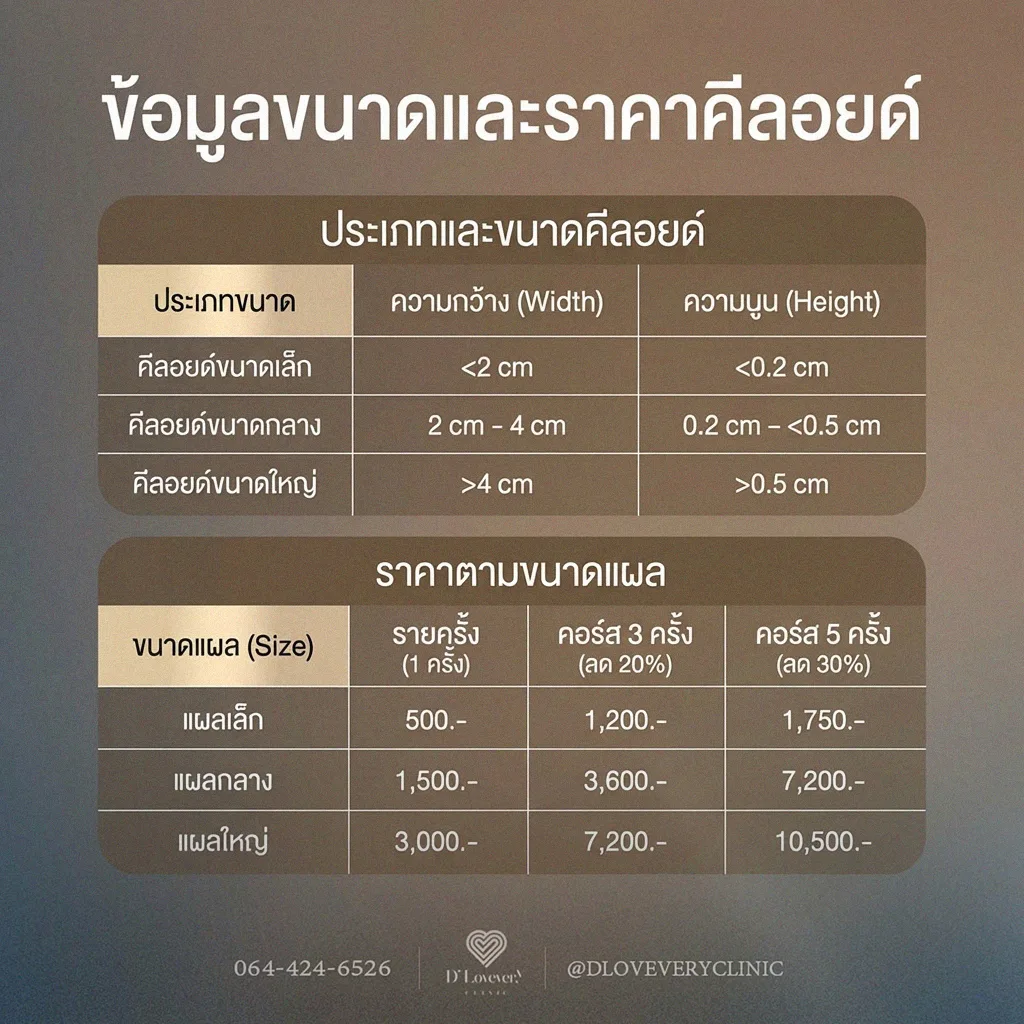
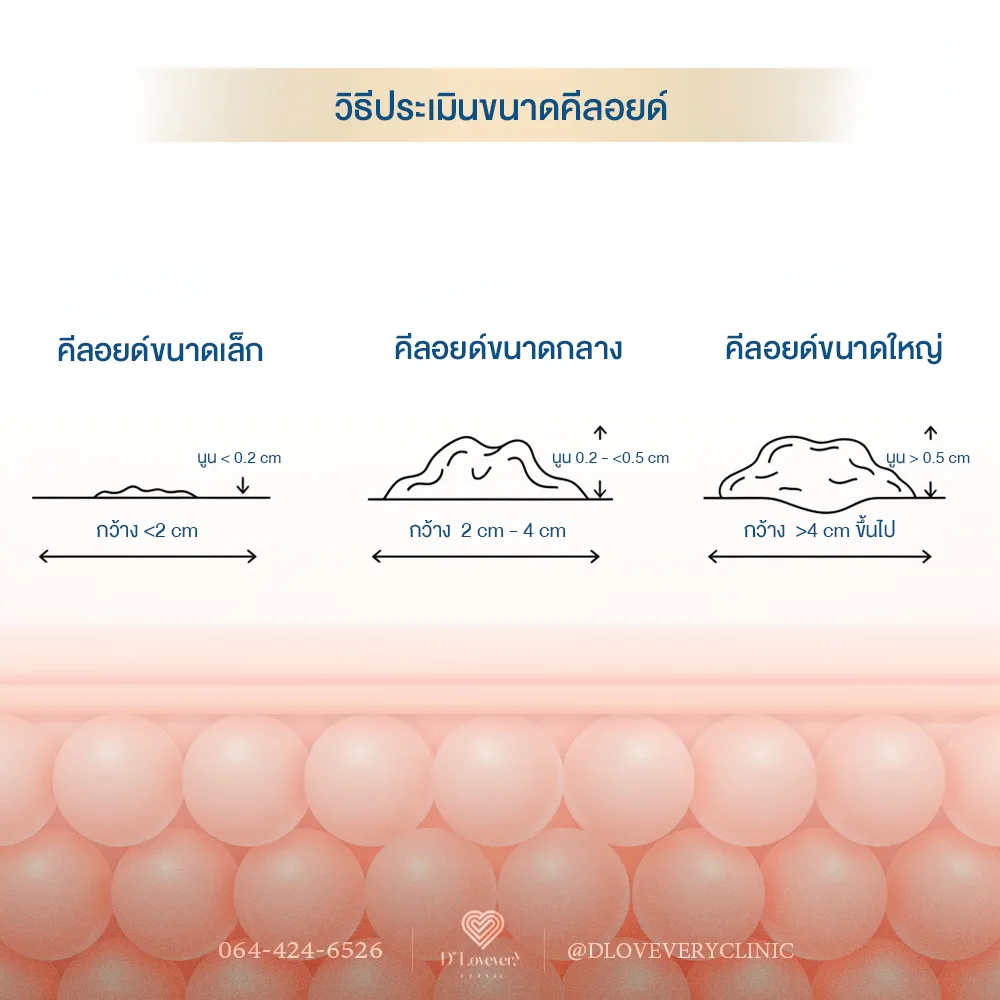
| Wound size | per time (1 time) | 3-session course (20% discount) | 5-session course (30% discount) |
|---|---|---|---|
| small wound | 500.- | 1,200.- | 1,750.- |
| Middle wound | 1,500.- | 3,600.- | 7,200.- |
| large wound | 3,000.- | 7,200.- | 10,500.- |
Preparation “before” receiving the service (Pre-Treatment)
1. Provide your detailed medical history.
- If you have previously had injections or surgery, please inform your doctor how many times you have had it done or how long you have stopped treatment so that the correct dosage can be calculated.
- if any History of drug allergies หรือ Pregnant/Breastfeeding Please inform us in advance every time.
2. Discontinuing medication and vitamins (if surgery is planned).
- If it's a standard vaccination, there's no need to fast.
- If it's surgery: You should avoid aspirin, NSAIDs, vitamin E, fish oil, and ginkgo biloba for at least one week, as they may make it difficult for bleeding to stop and cause wounds to bruise easily.
3. Dress code
- You should wear clothes that... "Loose and comfortable" This also allows for the exposure of easily wounded areas, facilitating the procedure and reducing friction immediately afterward.
4. Get enough rest.
- Getting enough sleep and having a normal meal beforehand will help reduce anxiety and pain during the procedure.
Self-care "after" receiving treatment (Post-Treatment)
Care is categorized according to the type of treatment, as follows:
Case 1: After keloid dissolving injection.
- Normal symptoms: You may experience a dull ache or slight swelling and redness at the injection site for the first 1-2 days.
- Primary care:
- If you experience pain, you can take paracetamol or apply a cold compress.
- Do not scratch! Itching is a sign of a reaction to medication or tissue regeneration. If the itching is severe, gently rub the affected area or apply an anti-itch cream as prescribed by your doctor.
- Do not massage or knead. The injection site (unless directed by a doctor) should be avoided, as this may cause the medication to spread incorrectly.
- You can shower and use soap as usual (wait 2-4 hours for the needle hole to close completely).
Case 2: After keloid surgery.
- Most importantly: Reduce tension.
- Avoid strenuous movements, lifting heavy objects, or stretching your arms to their full extent during the first 2-4 weeks because... "Tension" That's the main reason why keloids grow back.
- Wound care:
- Avoid contact with water. For the first 3-7 days (or until the stitches are removed), to prevent infection, wipe yourself down instead of showering, or use waterproof bandages as directed.
- Please come for suture removal as scheduled (usually 7-14 days).
Case 3: After Pico Laser treatment to reduce scarring.
- Avoid sunlight: Avoid strong sunlight and apply sunscreen to the scar regularly to prevent hyperpigmentation.
- Moisture: Apply moisturizer or scar gel frequently to allow the scabs to peel off naturally. Do not pick or scratch them.

5 Reasons to Choose D' Lovevery Clinic for Your Scar Treatment
- Individual analysis: The doctor personally assesses each wound and provides clear information about the advantages and limitations of each program before service.
- Precise injection technique: The doctor injects the medication directly into the core of the keloid to ensure it works effectively and minimizes the side effect of skin indentation.
- Modern tools: We use a state-of-the-art Pico Laser to refine skin details in the final step.
- Follow-up is ongoing: We provide care until the entire process is complete; we don't abandon our patients. If there are any signs of recurrence, the doctor will address them immediately.
- Relaxing atmosphere: The clinic is clean, the service is sincere, the staff are lovely, and they provide complete information. See customer reviews.

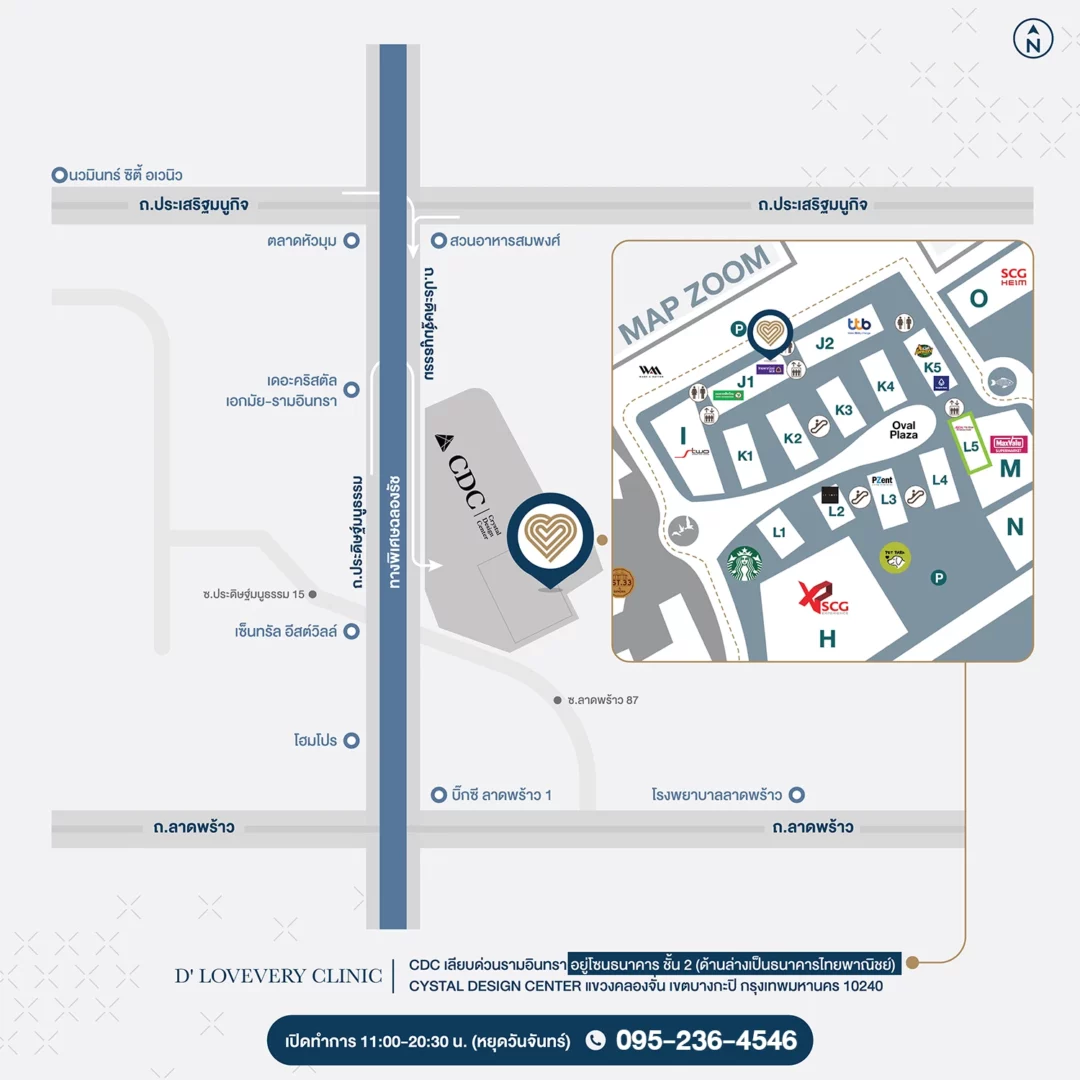
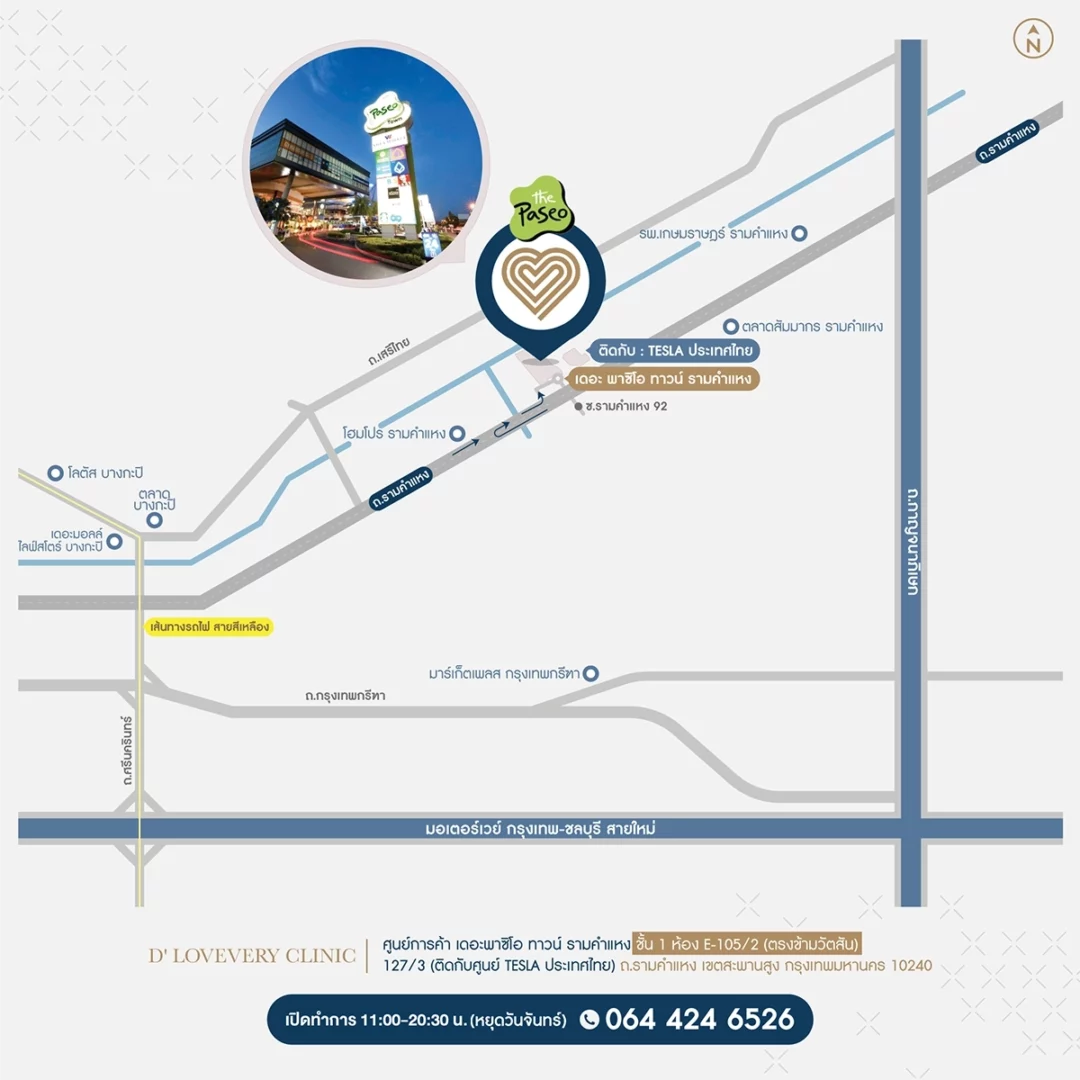
- Paseo Town Ramkhamhaeng Branch Call 064-424-6526
- Crystal Design Center (CDC) branch Call 095-236-4546
You didn't think it would be a problem, right? It's just shrimp marinated in fish sauce, a popular dish that many people order when they're chilling out.
After facial surgery or injections. You should refrain from eating shrimp marinated in fish sauce and all other raw foods for about 2-4 weeks. Yes, because raw meat is at risk of contamination. Remember that fish sauce and lemon juice cannot kill dangerous bacteria like Vibrio. If consumed when the body has wounds, it may increase the risk of inflammation and severe bloodstream infection. Furthermore... Spicy salad dressings are also very high in sodium, which draws water into the body, causing swelling, delaying the healing of surgical wounds or fillers, and making it harder for them to recover. Okay, just bear with it a little longer. Wait until the wound has completely healed before you go back to enjoying all the delicious food. That way, your beauty will be perfect and you'll be safe!
Good news! These types of skin tags don't require surgery. The solution is... CO2 Laser It is highly accurate and there is a good chance the skin will return to a smooth state. 95-98% It only takes a short time to make. 5-10 minutes Connect to a single point only.
The starting service fee is 2,500 baht per spot, plus 200 baht for topical medication.
A polyp with a large head but a small stalk is called... Acrochordon หรือ Pedunculated Skin Tag which is Benign tumor (non-cancerous) Yes, the main cause is... Skin friction Or it could be genetic. Although not dangerous, if left untreated, it could get caught in clothing and become inflamed. The standard and safest treatment is... CO2 Laser Treatment To remove skin tags for a smoother complexion. Leaves no unsightly scars. And you should not attempt to remove it yourself by any means. Even though the stalk is small, it can easily break or detach. It requires a proper, sterile method. Also, it has many blood vessels supplying it; improper methods can be painful, cause slow bleeding, and lead to numerous other complications.
Treatment by incision and drainage alone has a high chance of recurrence. 80% While total excision of the cyst has a lower recurrence rate.
Therefore, in every case, the doctor has to perform surgery to remove the sac. Will surgery to remove sebaceous glands in the legs provide a permanent cure? It depends on whether the capsule is completely removed. Yes, if the bag isn't completely removed, there's a chance... There is a high chance of recurrence at the same point. It's like a balloon being filled with new water, but if the doctor uses a different method... A minor surgery to remove all of the cysts. This will help to permanently reduce the chances of recurrence.
This story has both aspects... "True and untrue" It's a mix, patient, because while some people are lucky and get a complete cure with just one surgery, there are many other cases where... The more you cut it, the more swollen it becomes. Or, new keloids may form and spread along the stitches, which can be worrying. This is because everyone's body responds to wounds differently, so doctors often recommend... Surgery combined with other treatments (Combined Therapy) For example, injecting anti-inflammatory drugs or using lasers to block abnormal tissue growth, and the patient must... Maintain discipline in consistent wound care. To ensure a smooth result and prevent recurrence.
There are three main ways to diagnose malignant hyperthermia (MH):
- Family history taking It is crucial to thoroughly check whether any direct relatives have experienced serious complications or died while under anesthesia, as this is the most important initial screening method.
- Genetic testing By taking a blood sample to detect abnormalities in inherited genes, and...
- Muscle biopsy (CHCT) This is the international standard (gold standard) and the most accurate method, involving surgically taking a tissue sample from the thigh and testing its reaction to anesthesia in a specialized laboratory.
Therefore, if your last name is on the 32-risk list or you have a suspicious family history, you should consult an anesthesiologist to prepare and plan for the safe use of anesthesia before any surgery.
The PN drug has a high concentration and the ability to... Angiogenesis Or, it can promote the creation of new blood vessels, delivering nutrients to the tissue around the surgical wound more effectively than using just a regular skin booster.
Using group helpers. PN, for example. Plinest หรือ They swear It helps surgical wounds heal faster and more smoothly. Because it helps repair cells from within, but you should start getting injections when... The wound must be completely closed. Yes, for external care, the patient should focus on topical application. Silicone gel for reducing scars. And avoid sunlight to prevent post-operative hyperpigmentation (PIH). If the patient is unsure whether the wound is ready for injection, it is safest to have a doctor assess the site beforehand.
Brown spots on the stomach and around the waist are most often... Seborrheic keratosis This is caused by genetics and increasing skin aging. They are usually harmless and do not become cancerous. Yes, the population aged 50 and above is larger. 80-90% will start to develop skin tags (Seborrheic Keratosis). At least one spot on the body, and the number increases with age.
Observable characteristics The surface will look It's slightly rough, as if someone had stuck modeling clay on it. Or some spots may appear smooth, ranging from light to dark brown. There's no need to remove them as they're under clothing, but if you're really concerned, you can consult a doctor. Removal is usually done using a laser. CO2 Laser Yes
Regarding the questions asked by the patient. Pico Laser treatment for both arms costs 3,999 baht. Yes, this program is designed for patients who need it. Show off your arms with confidence. Especially for those concerned about uneven skin tone, dark spots from insect bites, or rough skin from ingrown hairs, treating both arms thoroughly will help clear pigmentation, resulting in smooth and clear skin on your arms, allowing you to wear sleeveless tops or tank tops without worry.
For those who want to take care of their undercarriage, we have a program... Buy both legs for 4,999 baht. This is a very suitable option for people with these problems. "Legs with poor lymphatic drainage." Or, for long-standing scars, the slightly higher price for a wider treatment area (covering both shins and calves) is well worth it in restoring confidence to wear shorts or swimsuits.