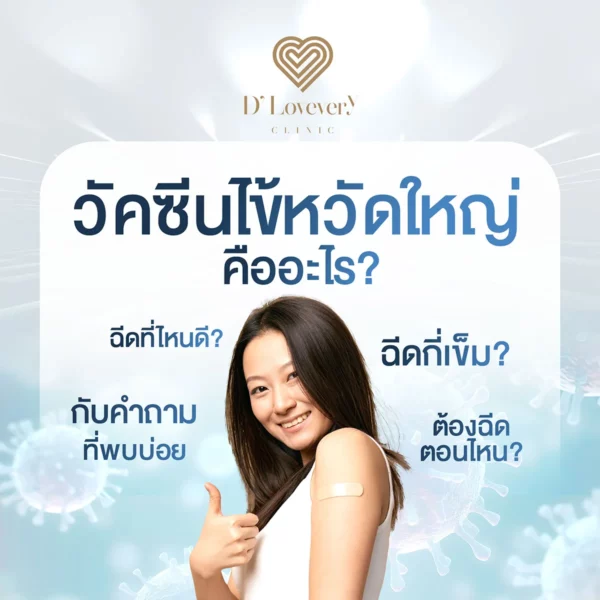

What is a flu vaccine?
The influenza vaccine used in Thailand is made from inactivated viruses and is an injectable vaccine designed to protect against 3-4 influenza strains, based on the recommendations of global influenza surveillance agencies that predict the most significant outbreaks of the year.
Influenza vaccination effectively stimulates immunity against potential seasonal influenza viruses, reducing the risk of complications for vaccinated individuals.
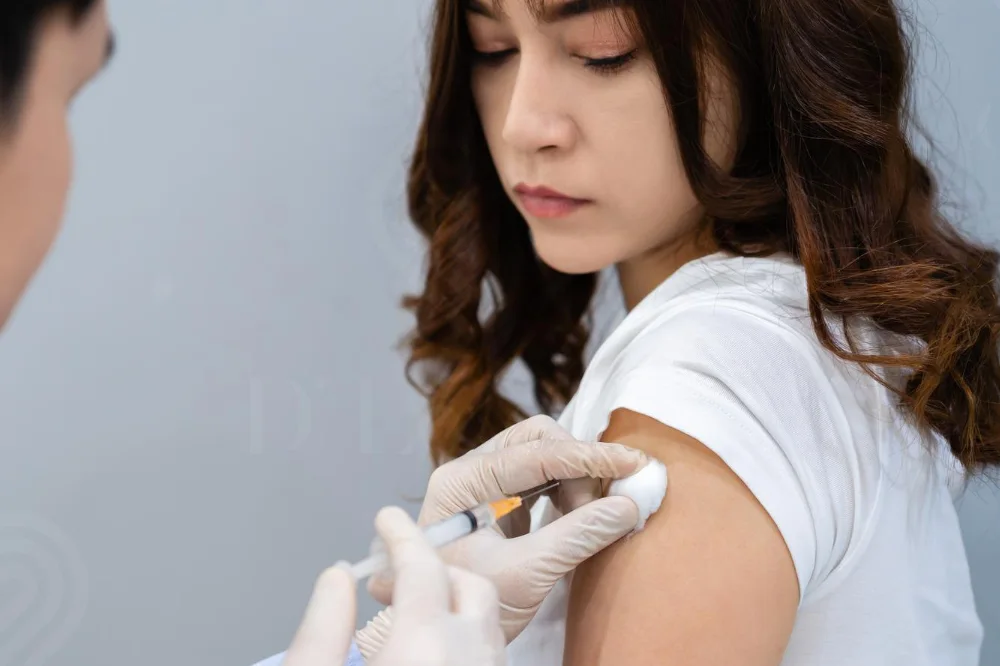
Influenza is a disease where the virus strains are constantly evolving, meaning new strains may emerge each year. For 2023, a total of four influenza virus strains were detected, divided into two main groups:
- Virus type A, strain Victoria (H1N1) (an A/Victoria/4897/2022 (H1N1) pdm09-like virus)
- An A/Thailand/8/2022 (H3N2)-like virus.
- Austrian lineage B virus (a B/Austria/1359417/2021 (B/Victoria lineage)-like virus)
- Type B virus, Phuket strain (a B/Phuket/3073/2013 (B/Yamagata lineage)-like virus)
The existence of diverse strains means that vaccine production must take these strains into account to ensure the best possible protection against the disease. This is why regular annual influenza vaccinations are necessary to respond to potential changes in viral strains.
Where should I get the vaccine?
It is usually injected into the muscle of the upper arm, but for infants and young children, it is injected into the muscle of the thigh.
How many times or doses of the flu vaccine are needed?
The number of flu shots required each year may vary depending on an individual's age and health status. The following table summarizes the recommended number of flu shots for different age groups.
| ช่วงอายุ | Recommended number of injections |
|---|---|
| 6 months – 8 years | Received the first dose of the vaccine, consisting of two injections one month apart. |
| 6 months – 8 years | 1 dose (if you have previously received a flu vaccine) |
| 9 years and up | 1 injection |
Children aged 6 months to 8 years who have never received the flu vaccine or have an unclear vaccination history will need to receive two doses. The second dose will be given approximately 4 weeks after the first to maximize the effectiveness of the immunity.
Influenza (flu) is a disease caused by a type of virus that can cause illness ranging from moderate to life-threatening. The virus spreads through the respiratory system, including the nose, throat, and lungs.

How dangerous is the flu (influenza)?
- It can trigger asthma attacks.
- Inflammation of the bronchioles occurs.
- An infection occurred in the ear canal and nasal cavity.
- This can lead to abnormal heart function.
- This can lead to pneumonia.
Therefore, it is important to prioritize the timely prevention and treatment of influenza to avoid the risk of potential complications.
Things to know before getting the flu vaccine.
- Do I need to get the flu vaccine every year? The vaccine strains can change each year. According to the World Health Organization and the Centers for Disease Control and Prevention, it is recommended to get vaccinated annually to reduce the risk of contracting the flu.
- Influenza vaccines do not provide 100% protection against the virus, but they do help reduce the chances of developing complications from the flu.
Who should not get the flu vaccine?
- Children under 6 months of age; individuals with a history of chicken or egg allergies.
- People who have a history of allergic reactions to the flu vaccine.
- People who have recently recovered from an acute illness within the past 7 days.
- Individuals who have uncontrolled conditions or whose conditions worsen during the vaccination period.

Instructions before receiving the flu vaccine.
You should inform your doctor about any allergies to medications and food before receiving vaccinations, as there may be potential side effects such as swelling, redness, or lumps at the injection site, fever, headache, or muscle pain. These symptoms usually occur about 1-2 days after the vaccine and will disappear on their own. If you are taking any other medications or have any other underlying medical conditions, you should also inform your doctor in detail before treatment.
Steps for receiving vaccination services.
AtD' Lovevery Clinic Influenza vaccinations are available, and the service procedure is as follows:
- Pre-vaccination health assessmentPrior to vaccination, medical personnel will conduct a general health assessment and check for any allergies to medications or vaccines to ensure the safety of the vaccination.
- Prepare the injection site.The injection site, usually on the upper arm, will be cleaned with alcohol to prevent infection.
- VaccinationThe vaccine will be injected into the prepared muscle area using appropriate technique to minimize pain and any potential swelling or irritation.
- Post-injection follow-up.After vaccination, recipients may need to wait in a monitoring area to check for any abnormalities, such as allergic reactions to the vaccine. This usually takes about 15-30 minutes.
- Post-injection instructions.Medical personnel will provide instructions on what to do and what not to do after vaccination, including how to manage potential side effects such as pain at the injection site or a slight fever.
What are some possible side effects of the flu vaccine?
After receiving the flu vaccine, you may experience minor side effects, which are normal and usually disappear on their own within 1-2 days. Common side effects include:
- Pain, swelling, and redness at the injection site.
- Tired, lacking energy.
- Mild headache
- Muscle pain
- Slightly nauseous.
- Low-grade fever (below 38 degrees Celsius)
However, if you experience severe symptoms such as difficulty breathing, palpitations, a rash spreading across the body, or swelling of the face or mouth, you should see a doctor immediately, as these may be severe allergic reactions to the vaccine. This is rare, though.
In general, the benefits of getting the flu vaccine outweigh the potential risks, and these minor side effects are not dangerous. If you have any concerns or further questions, consult your doctor or pharmacist for appropriate advice.
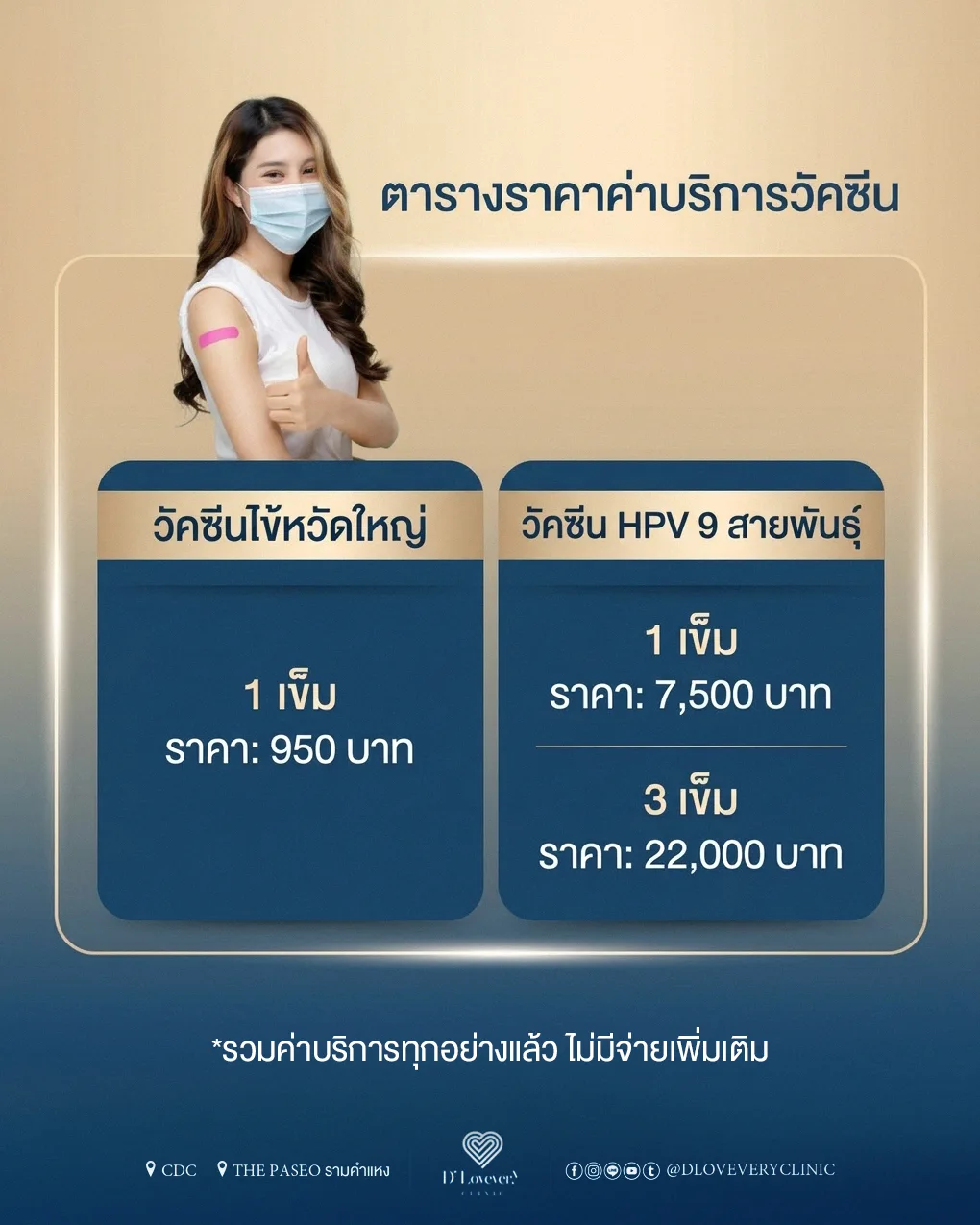
How much does a flu vaccine cost?
| Types of vaccines | Price (Baht) |
|---|---|
| flu vaccine | 950 baht per person |
| Come as a family of 3 or more. | 750 baht per person |
- Paseo Town Ramkhamhaeng Branch Call 064-424-6526
- Crystal Design Center (CDC) branch Call 095-236-4546


That's likely true, but the number of recovery days may vary depending on the individual and their specific circumstances.
Even after compensating for the sleep lost the following night. Analytical thinking performance continues to decline by up to 30%. During the 24-48 hours after one night of sleep deprivation, and... Hormone levels that affect appetite control may take up to 3 days to return to normal.
Just one night of sleep deprivation can cause mood swings, dull skin, and a weakened immune system more than many people realize. Regaining a consistent sleep routine and getting enough sleep regularly is crucial for maintaining good health and beauty.
Genetic cancer testing Doing it just once in a lifetime is enough. Yes, because our DNA code never changes. The ideal age for testing is 18 years and older. Or for those who are planning a family, but if a patient has a family history of cancer, they can consult for testing immediately. This test is not done to create anxiety, but to help us... Being aware of risks in advance allows you to plan preventive healthcare accurately. Yes
Currently, gene testing uses Next-Generation Sequencing (NGS) technology, which has an accuracy rate of over 99%, with an average cost of approximately... 15,000 – 30,000 baht per session This is considered a one-time risk assessment that is worthwhile for a lifetime.
Although HDL is considered good cholesterol, If levels exceed 90-100 mg/dL, it may be converted into dysfunctional HDL (high-density lipoprotein) and no longer protect the cardiovascular system. This is often caused by genetics or heavy alcohol consumption. The correct solution is... It's not about running around looking for HDL-lowering pills. But the patient should turn to... Limit alcohol consumption, focus on controlling other bad cholesterol (such as LDL and ApoB), and maintain overall vascular health to reduce inflammation. This will help reduce the risk of heart disease more directly and safely.
For those who have just started taking their health seriously, there are a lot of numbers to understand, so let's explain them in simple terms. Individuals with consistently high HDL levels (above 90 mg/dL) may have an increased risk of developing cardiovascular disease compared to those with HDL levels within the normal range (40-60 mg/dL).
To illustrate with a simple example, the doctor asked the patient to compare HDL to "garbage trucks" that collect and dispose of fat from the blood vessels. Normally, if there are just the right number of trucks, the blood vessels will be clean. But if the patient has too many garbage trucks (extremely high HDL levels), these trucks are often those with "broken engines" or are of poor quality. Instead of helping to collect the garbage, they cause traffic jams and obstruct the blood vessels. In medical terms, this condition is called... Dysfunctional HDL, or abnormally functioning good cholesterol. This might actually increase the risk of heart disease instead of preventing it.
Sleeping deeply every other night is not unusual, but you shouldn't ignore it.
What the patient is experiencing may be an imbalance. "Sleep pressure" Yes, there's a chemical in our brain called... Adenosine These substances accumulate gradually while we are awake, causing us to feel sleepy. After a very deep and restful sleep on the first night, the body completely clears out these sleep-inducing substances. Therefore, on the second night, there aren't enough accumulated sleep-inducing substances to trigger the brain into deep sleep mode. The body feels like, "I just had a good night's sleep," leading to difficulty falling asleep or restless sleep the following night. The solution that doctors want patients to implement immediately is "waking up at the same time every day" (within a margin of error of no more than 30 minutes). Even if you didn't get enough sleep the night before, you must not sleep in late to compensate. This is to maintain a consistent level of sleep-inducing hormones, which will help you regain sound sleep every night.
There's even serious research into this. Medical research reports indicate that maintaining a consistent wake-up time every day (± 30 minutes) for two weeks can reset your biological clock and reduce night-to-night sleep variability by up to 40%. This helps regulate the melatonin secretion cycle, promoting more restful sleep every night.
Don't trust information from TT more than you trust global organizations. The World Health Organization (WHO) states that... UVA rays account for up to 95% of radiation. Of all the ultraviolet radiation that reaches the Earth's surface, its intensity is relatively consistent throughout the daytime, from morning to evening. In addition, UVA rays can penetrate clear glass by up to 75%. This means that exposure to morning sunlight, even by a window, can stimulate melanin production and damage collagen in the deeper layers of the skin (photoaging). Therefore, it is recommended to use a sunscreen with a high SPF. PA+++ and above For comprehensive skin protection.
Even the gentle morning sunlight can damage our skin. It can darken and develop wrinkles. Because sunlight contains... UVA rays are present in constant amounts throughout the day and penetrate deep into the skin. This radiation will go... Stimulates the production of melanin pigment. It causes skin dullness, freckles, and dark spots without causing any burning sensation.
Therefore, if a patient intentionally goes out into the morning sun to synthesize vitamin D, the doctor must be honest and say that while they will benefit from vitamin D, they will also get duller skin as a bonus. However, it won't be enough, and it shouldn't be long enough to be harmful to the skin. But if it's a day you have to go out or be exposed to the sun without needing any vitamins, in order to protect your youthfulness and radiance, the doctor would like to emphasize to the patient that... You must apply sunscreen every day. Even though I only intended to go out into the sun for a short time in the morning.
Patients who come here are confident because of the results. 'Actual service recipients' More than that. Honestly, these days when we see celebrities promoting a clinic, we secretly know it's just marketing, right? Sometimes they might not even be genuinely doing it. That's why I want our clinic to grow as well.Reviews from real patients with genuine problems who walked in, saw real results, and recommended it to others. Our front-of-house team works easily with real patients who come with problems, want solutions, want to look good, and want to improve their health. We provide comprehensive advice. But as for celebrities, I think they're already beautiful. I don't know what I can do for them 🙂 Actually, it doesn't matter if it's a patient, a celebrity, or a famous person coming for treatment. 'Patient confidentiality' Therefore, it is just as important as the treatment outcome. All clinic case reviews have been authorized.From the patient:
Suppose a patient feels extremely fatigued, works hard, doesn't get enough sleep, and their skin looks dull. The doctor might recommend injections. Once a week for 4 weeks. To boost the body's energy and improve skin complexion. Then, once the patient feels much better, the frequency can be reduced. once a month It's to maintain it in good condition.
Myer's Cocktail คือ Delivering essential vitamins and minerals directly into the body through the bloodstream. To help restore energy, boost immunity, and improve skin health from within. The frequency of injections will vary depending on the individual's needs and physical condition. Initially, it is recommended to inject 1-2 times a week for rapid recovery, and then reduce to 1-2 times a month for long-term maintenance. The most important thing is to consult your doctor to plan the most suitable treatment for each individual patient. Yes
Don't worry about her at all. She knows every spot that needs repairing, just like the post office knows every house in the neighborhood. Stem cells are like... "Personal life support unit" They have the ability to divide and repair damaged cells, and they know their coordinates through... "The Homing Effect" This involves following distress signals (a group of cytokines) released from damaged or inflamed tissue, allowing stem cells to go directly into the affected area. Rejuvenate aging skin, stimulate collagen production, and repair cells. It is precise and targeted, helping patients achieve youthful, strong, and radiant skin from within at the cellular level.