

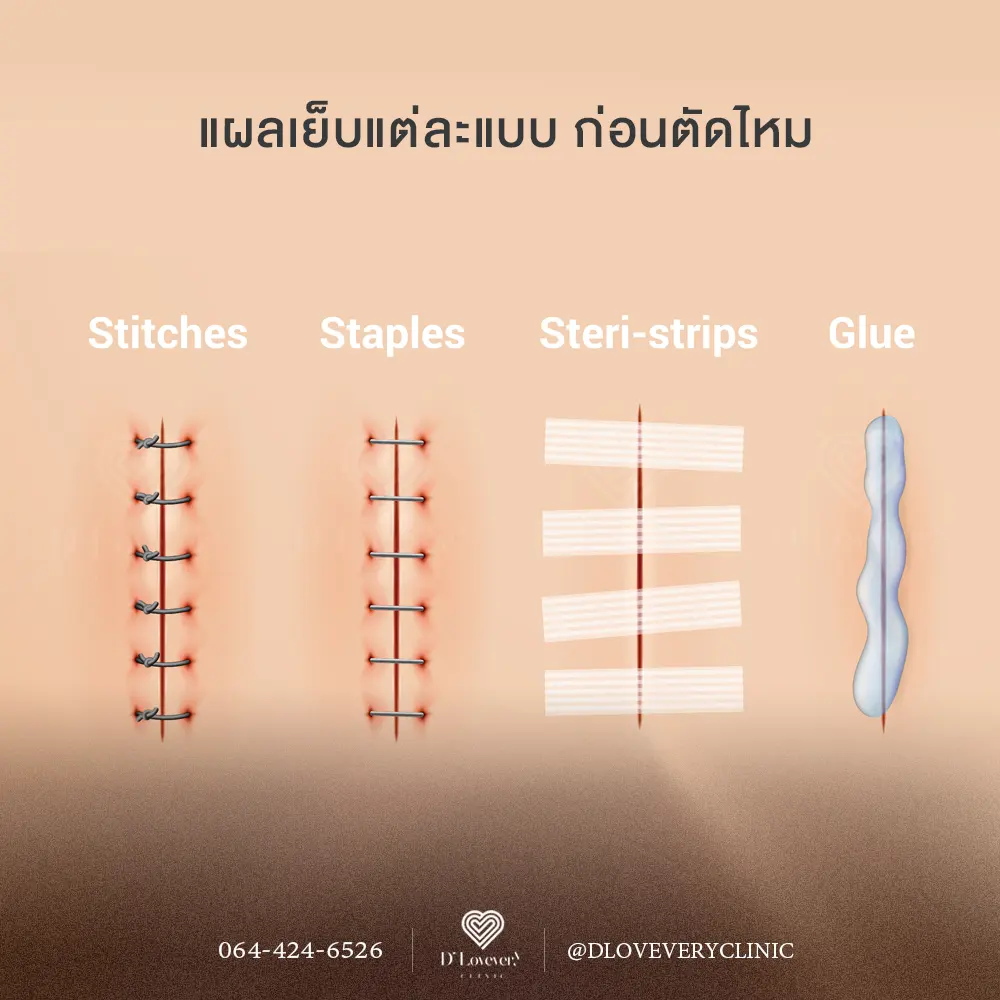
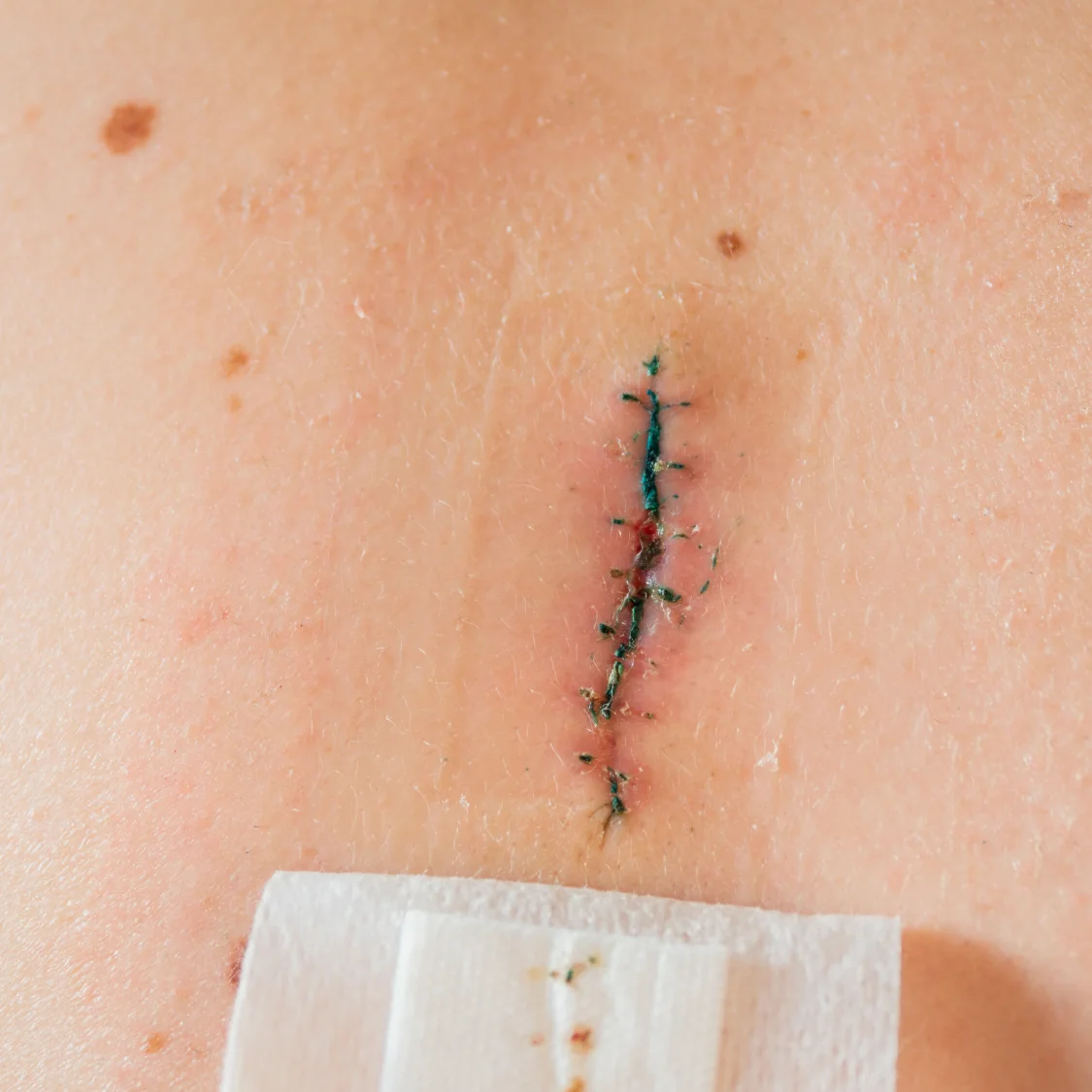
Guidelines for preventing wound dehiscence after suture removal.
- Make sure the wound has completely healed before removing the stitches.
- This is determined by examining the appearance of the wound, such as whether the edges are well-closed, not swollen or red, and without oozing fluid or signs of infection.
- The time it takes to remove sutures depends on the location of the wound. For example, wounds on the face (are usually removed faster) and wounds on the body or legs (must be left in longer).
- Tell your doctor if you have any lingering questions or notice any unusual symptoms at the wound.
- If the patient feels that the wound is still very painful, the wound edges have not healed, or there is fluid oozing from the wound, they should inform the doctor immediately before the stitches are removed. Do not rush to remove the stitches.
- Reduce other risk factors.
- Avoid excessive use or movement of the body part around the wound.
- Always keep the wound clean.
- If you have diabetes or a condition that causes slow wound healing, you must strictly control your blood sugar levels or manage your underlying medical conditions.
- For added protection, your doctor may choose to use dissolvable sutures or apply a surgical tape to cover the wound for a period after the sutures are removed.
Factors causing wound dehiscence after suture removal.
- Removing the stitches too soon.
- Removing the sutures before the wound has fully healed, even after the recommended time, is risky because the wound is still delicate. When the sutures are removed, the tissue that is not yet firmly attached may separate.
- The stitches were removed too late.
- If sutures are left in place for too long until the wound has fully healed, a condition called "embedded suture" may occur, meaning the sutures become firmly embedded in the tissue. This makes it difficult to remove the sutures and can cause injury to the surrounding skin. Because the wound is fragile, pulling or tugging the sutures may cause the wound to split or separate.
- Suture cutting techniques
- In some cases, special suturing techniques are used, which may require more force than usual, potentially causing the wound to reopen. However, doctors and nurses usually take extra care.
- แผลติดเชึ
- If the wound has pus, is swollen, or very red before the stitches are removed, the tissue...
- The patient has underlying medical conditions.
- Diabetes, weakened immune system, protein deficiency, smoking = slow wound healing.
- Wound care after suture removal.
- If, after the stitches are removed, you don't avoid pulling on the wound, such as lifting heavy objects, or don't properly cover the wound, it may reopen.
Post-wound care
After the stitches are removed, avoid getting the wound wet. Minimize movement or strain on the wound and strictly follow the wound cleaning instructions given by the clinic or doctor to prevent infection and promote proper healing. If you experience any unusual symptoms such as swelling, redness, or severe pain, consult a doctor immediately.
![[Mole and freckle removal review] Little Ikkyu wants to look beautiful before going on stage. Small or large moles, we can handle it! Co2 laser takes care of it.](https://dloveveryclinic.com/storage/2025/07/case88-co2-laser-1.webp)
![[Filler Injection Review] Dark circles don't have to be deep to be noticeable. Transform your look for a brighter, more youthful appearance at D'Lovevery Clinic.](https://dloveveryclinic.com/storage/2025/06/before-after-case-66-under-eyes-filler-dlovevery-clinic-2.webp)
![[Review] Under-eye fillers: A popular anti-aging procedure for a youthful face! Instantly restores radiance at D' Lovevery Clinic. If it wasn't effective, so many people wouldn't be doing it!](https://dloveveryclinic.com/storage/2025/05/before-after-case-48-under-eyes-filler-dlovevery-clinic.webp)