


ฆสพ.สบส. ๒๙๘๓/๒๕๖๗

How to tell if your blood triglycerides are high or low.

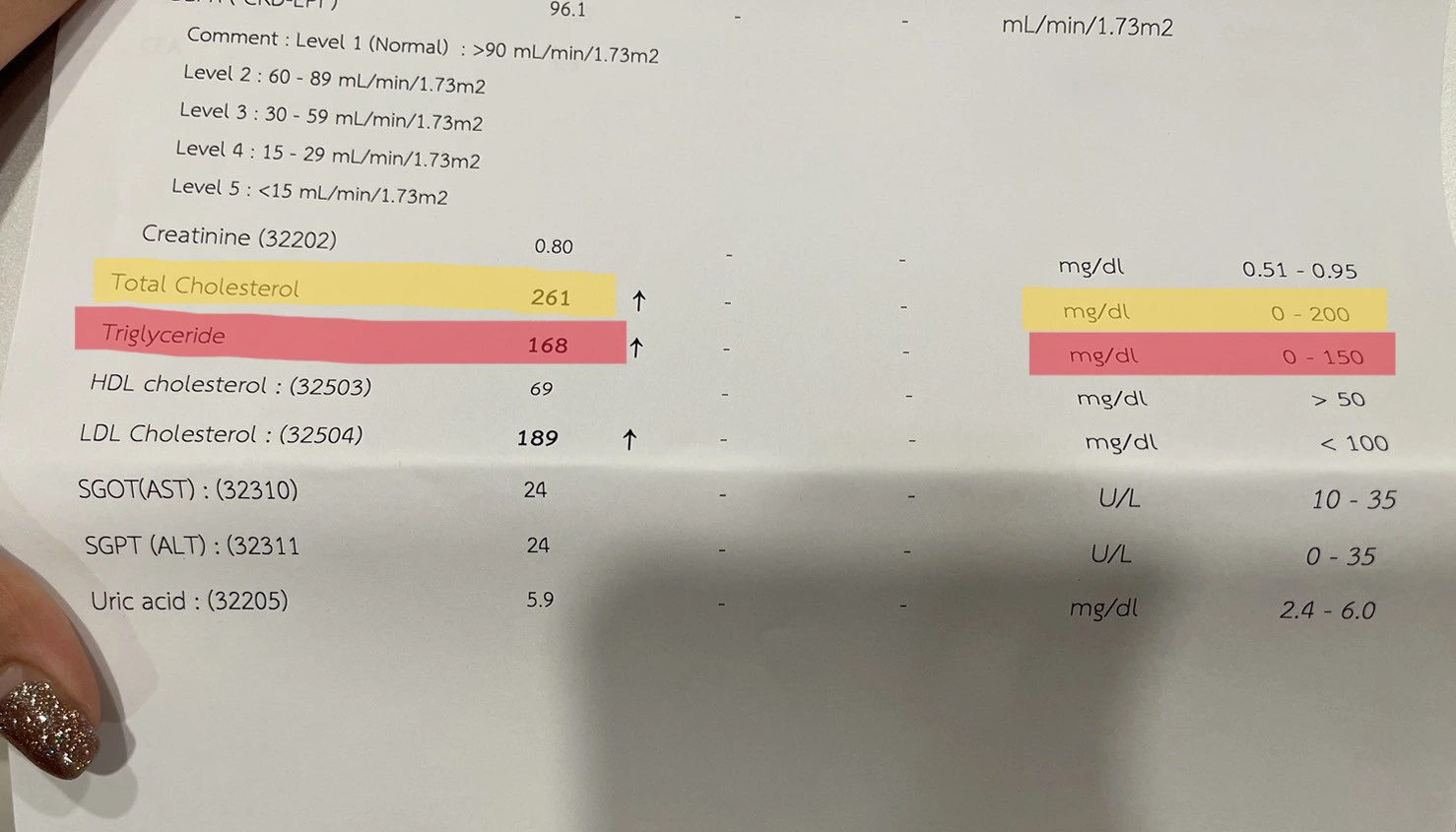
From the clinic's health report obtained from the lab, you need to check... Triglyceride levels The normal value should be: Below 150 mg/dL Levels exceeding these ranges indicate an increased risk of cardiovascular disease, including metabolic syndrome. The severity is categorized into 150-199 mg/dL (fairly high), 200-499 mg/dL (high), and over 500 mg/dL (very high). The test should be done in conjunction with cholesterol levels.Various types of blood sugar levels are tested to assess the overall risk comprehensively.

In cases of high triglyceride levels, immediate lifestyle changes are recommended. For example, reduce your intake of trans fats and processed sugars, and increase your regular exercise. This includes controlling your weight and avoiding alcohol. Regular blood tests are important to monitor treatment response and prevent potential long-term complications, with close guidance and supervision from your doctor.


 This answer provides only preliminary information. Please schedule an appointment with a doctor for a detailed examination and information.

Fat buildup in blood vessels, health check-up, health check-up package.
Weight loss, blood lipid check, health check.

How to check triglycerides.

For working adults, the normal range for blood triglycerides should be as follows:

  • Normal (appropriate) value: Below 150 mg/dL
  • Borderline high levels: 150-199 mg/dL
  • High level: 200-499 mg/dL
  • Very high level: 500 mg/dL or higher
Fat clogging the arteries: Blood test package for fat levels, health check.

Based on the health certificate.

  1. Triglyceride levels should be within the normal range or below 150 mg/dL.
  2. If the level exceeds 150 mg/dL, caution should be exercised because it indicates an increased risk of cardiovascular disease and may also be associated with metabolic syndrome.
  3. It should also be considered in conjunction with LDL, HDL cholesterol levels and blood sugar levels to assess the overall risk.

If the values ​​are abnormal, you should adjust your lifestyle, such as controlling your diet, reducing sweets and saturated fats, and increasing exercise, as well as consult a doctor for proper care.


Other frequently asked questions