
Clarifying the differences between raised scars (keloids) and normal scars.
The key difference between keloids and ordinary scars lies in their "formation process."
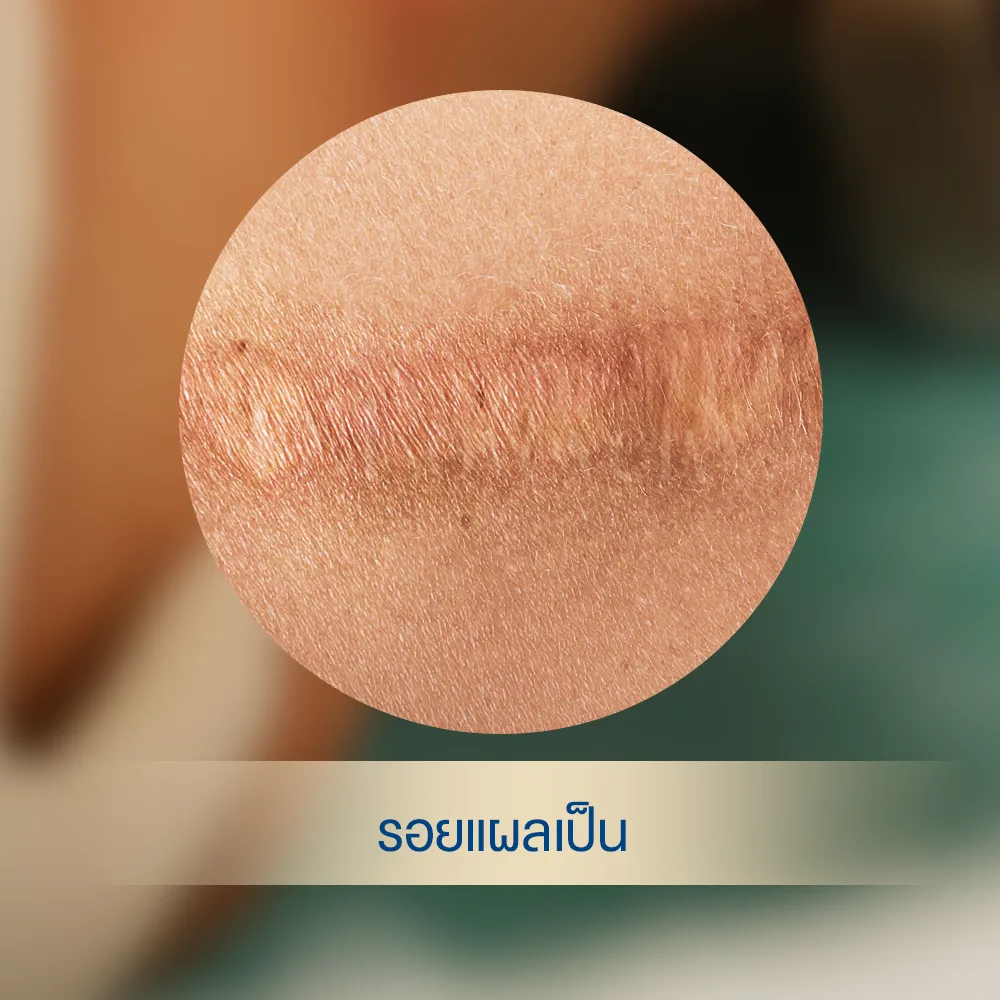
- The scar is normal: It is a self-repair process. 'normal' 'balance' In the body, once a wound has healed completely, the tissue regeneration process stops.
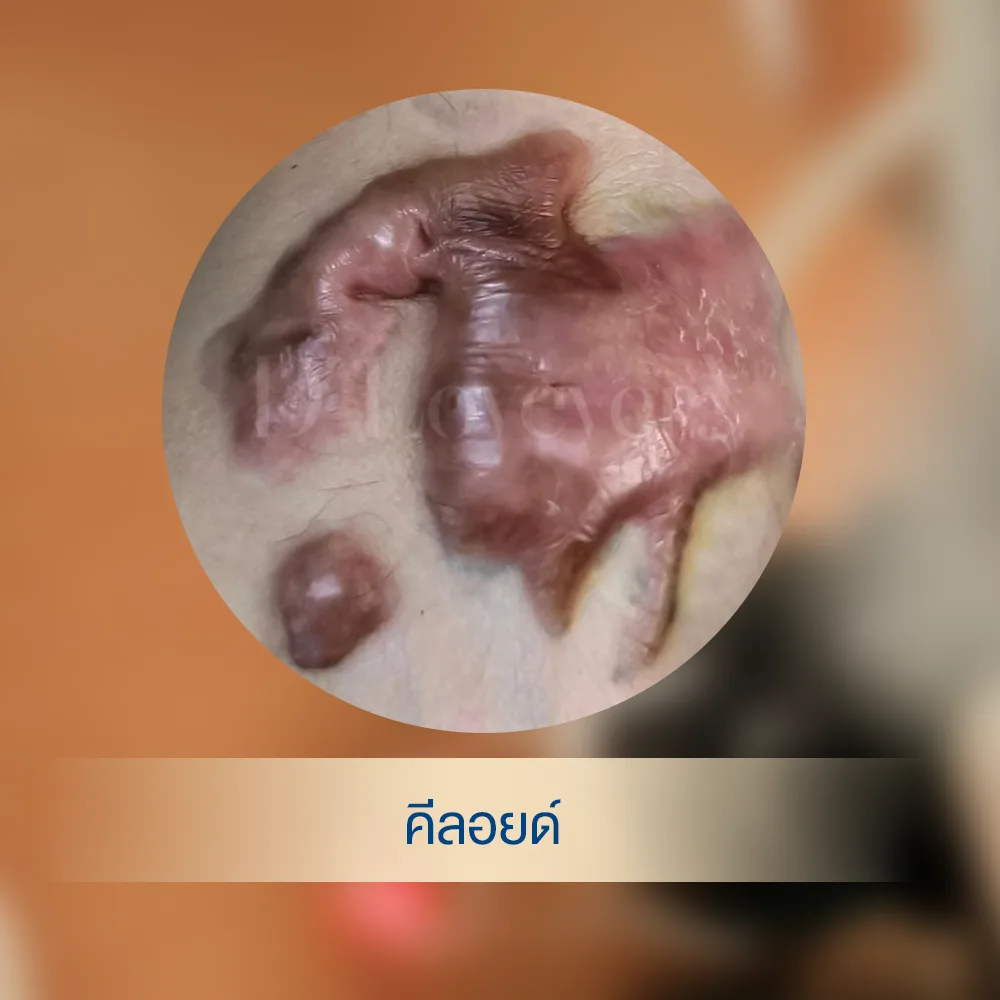
- Keloid: It is the repair process. 'Abnormal' Or simply put, our body. 'Too diligent' It's because of tissue regeneration. It keeps building up continuously, even long after the wound has completely healed, eventually spreading and growing much larger than the original wound.
When our skin is injured, whether from an accident, acne, or surgery, the body undergoes a self-repair process. The ultimate result of this process is a 'scar'. However, there are several types of scars, and patients often confuse them with 'general scars' and 'keloids'. These two are completely different.
Hypertrophic scars
This is the normal skin repair process. When a wound occurs, the body produces collagen to heal it. Once the wound has healed, collagen production stops.
- nature: Initially, it might be slightly raised and red, but that will subside over time. This type of scar will gradually fade and blend in with the skin. Or maybe it's slightly protruding, but its size... Does not extend beyond the boundaries of the original wound. Yes
- A simple example: Think of a shallow cut or a not-too-inflamed acne scar. Once it heals, it leaves a faint mark, but it doesn't become raised, hard, or enlarge. That's a typical scar.
| Nature | Normal scar | Keloid |
|---|---|---|
| Size | Smaller than or equal to the original scar. | Clearly larger than the original scar. |
| shape | Flat or slightly raised. | Raised, hard |
| color | Flesh-colored, or lighter until it closely matches your skin tone. | Red, purple, or darker than normal skin tone. |
| การเจริญเฆ | The spreading stops once the wound has healed. | It is continuously growing larger. |
Keloid scar
This is where it becomes different. Keloids occur when the body responds to a wound slightly abnormally, meaning it produces more collagen. unusually large And they refused to stop creating even after the wound had healed.
- nature: The most obvious characteristic is that this type of scar will... It is raised, hard, shiny, and most importantly, it has expanded beyond the boundaries of the original wound. It spreads gradually. Sometimes it may be itchy or painful, and the color tends to be darker than normal skin and doesn't fade naturally.
- A simple example: Some patients get their ears pierced. Initially, it's a small wound, but after a while, a hard, raised lump appears at the piercing site, growing much larger than the hole itself, and it becomes itchy. This is what's called a 'keloid'.
Laser treatment plan
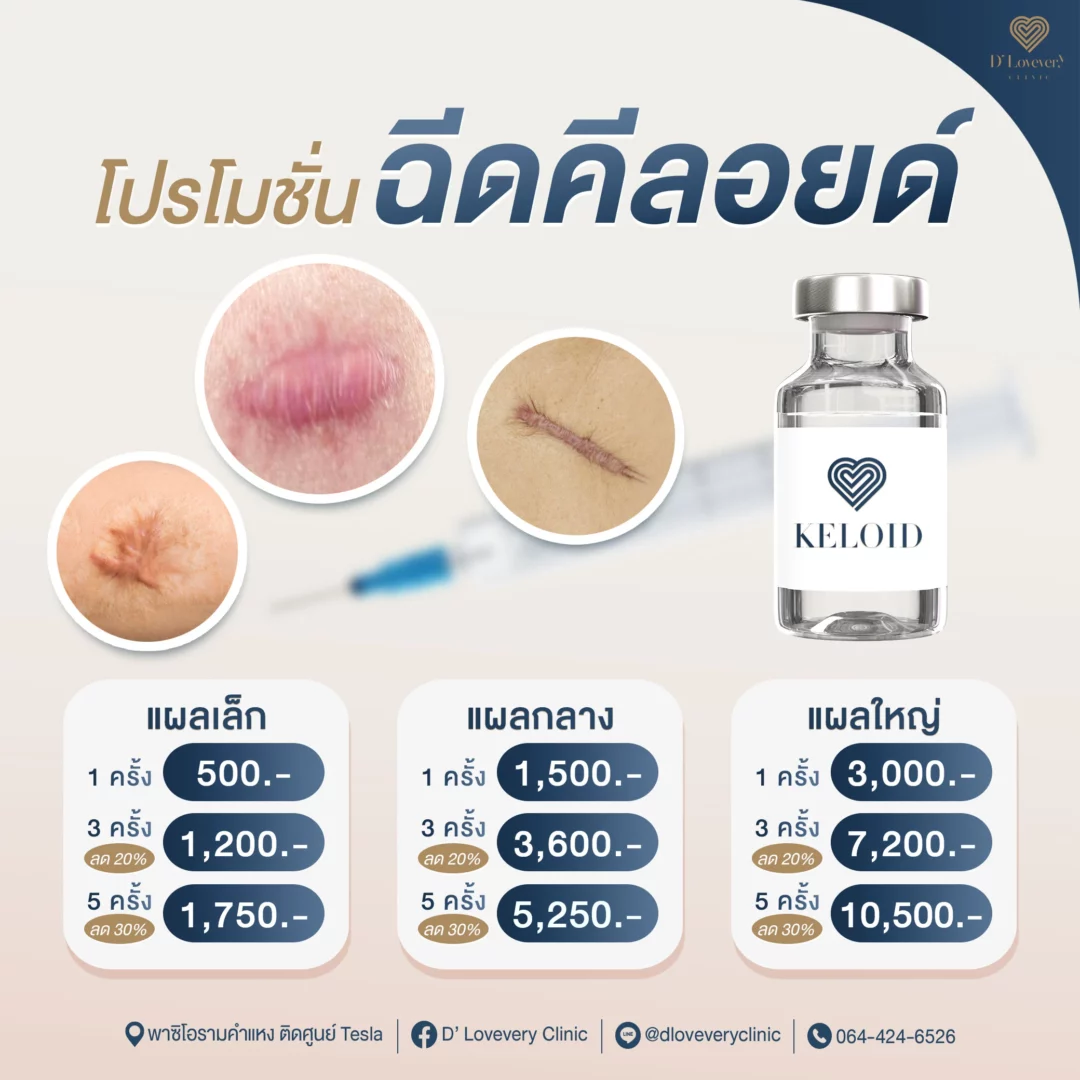
- Step 1 (Control): Injecting medication to create keloids. It stops growing and shrinks. Most people see results starting with this method.
- Step 2 (Reduce Size): If it's very bulging, use... CO2 Laser Helps to smooth out scars.
- Step 3 (Focus on details): ใช้ Pico Laser (Fractional Mode) To reduce redness and dark spots, and to create a smooth, beautiful complexion.
| treatment | Mechanism of operation | The primary goal of treatment. | What type of keloid is it suitable for? |
|---|---|---|---|
| Injection | The medication is injected directly into the keloid tissue to reduce inflammation and inhibit the overproduction of collagen-producing cells. | It softens keloids, reduces their size, and most importantly, stops them from expanding. | First-line treatment Suitable for all types of keloids, and used as an adjunct treatment to prevent recurrence. |
| CO2 Laser | Use laser energy to gradually... "Grinding" or "Finishing" The excess keloid tissue thickens out layer by layer with precision. | Reduce the raised appearance of keloids. It significantly flattens the size of scars. | Keloids of varying sizes Large and very hard and bulging. To achieve a smoother, more even scar (Debulking). |
| Pico Laser (Fractional Mode) | High-speed light energy is fired to create tiny cavities beneath the skin, stimulating the rearrangement of collagen and breaking down abnormal pigmentation. | Evens out skin tone (reduces redness/dark spots) and smooths skin texture. | A keloid that has collapsed or flattened but still remains a problem. Red marks, dark marks หรือ An unattractive surface texture. (Resurfacing & Pigment Removal) |

Surgical Excision
The doctor will consider it. 'Last resort' Actually, we would choose to use it in cases where the keloid is very large, does not respond to other treatments, or significantly impacts the patient's daily life. The reason we need to be especially careful is because... Surgery carries a very high risk of triggering keloid recurrence, and often the keloid may even grow larger and more raised than before. Yes, so if surgery is really necessary. The most important thing is to immediately administer other treatments in conjunction with this one. For example, continuous steroid injections after surgery, or radiation therapy in some cases, are used to control the wound healing process and prevent the body from forming new keloids.
![[Review from someone wanting clearer skin] Yuri does D' Aura Bright every week and Pico Laser every month. That's why her acne scars are fading like this.](https://dloveveryclinic.com/storage/2025/11/case-105-pico-laser-acne-dark-spot-cover.webp)
![[Keloid Review] Being a mother requires patience, but with C-section keloids, you don't have to suffer. We can help!](https://dloveveryclinic.com/storage/2025/07/case96-before-pico-keloid-2.webp)
![[Laser Review] Acne scars on the chin and jawline are no longer a problem at D'Lovevery Clinic.](https://dloveveryclinic.com/storage/2025/07/case95-pico-d-aura-bright-1.webp)