

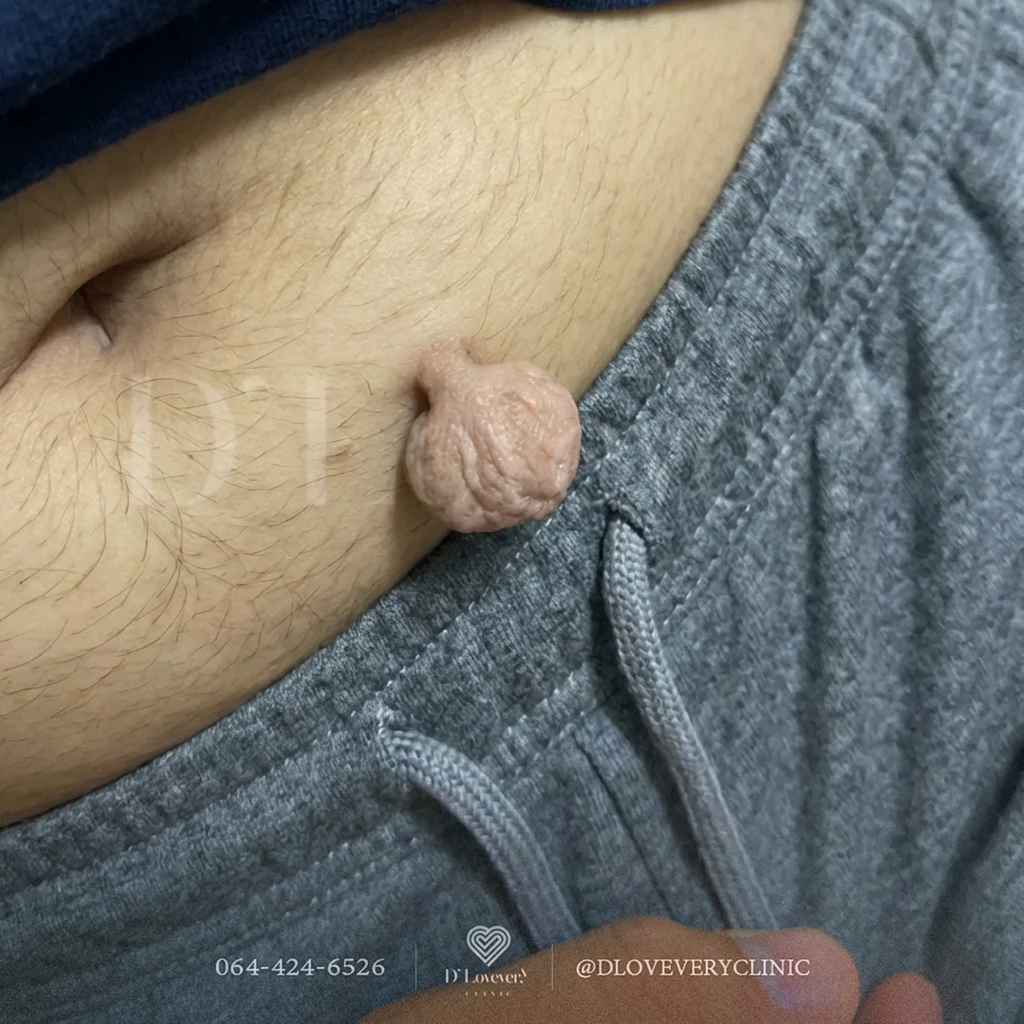
CO2 laser treatment: fast, effective, and stitch-free.
CO2 laser cauterization uses precise laser energy to convert into heat, which is then used to destroy the tissue in the area where the unwanted tissue is being removed.
The advantages:
- Fast and convenient: It doesn't take long; you can just apply a numbing cream or get a local anesthetic injection.
- No stitches required: After the procedure, there will only be shallow abrasions or small dents that are easy to care for and do not require stitches to be removed.
- Suitable for small items: It works very well on small skin tags, warts, or shallow moles that are numerous.
Disadvantages (for large moles):
- The roots may not have fully emerged: If the mole is large or has deep roots, the laser may not be able to destroy the root completely. This makes the chances of recurrence very high.
- Risk of developing pitted scars: If the doctor tries to use a laser to penetrate deeply and completely remove the root of a large mole, a lot of surrounding tissue will be damaged. It risks becoming a deep scar. Or it could lead to raised scars (keloids) in the future.
💡 Let me give you an example: CO2 therapy for large moles... It's like cutting grass with thick stems. If we only cut the part that protrudes above the ground, but the roots are still deeply embedded, the grass will grow back soon. Furthermore, if we try to dig deep into the soil to remove the roots with a lawnmower, it will leave a wide, unsightly hole.
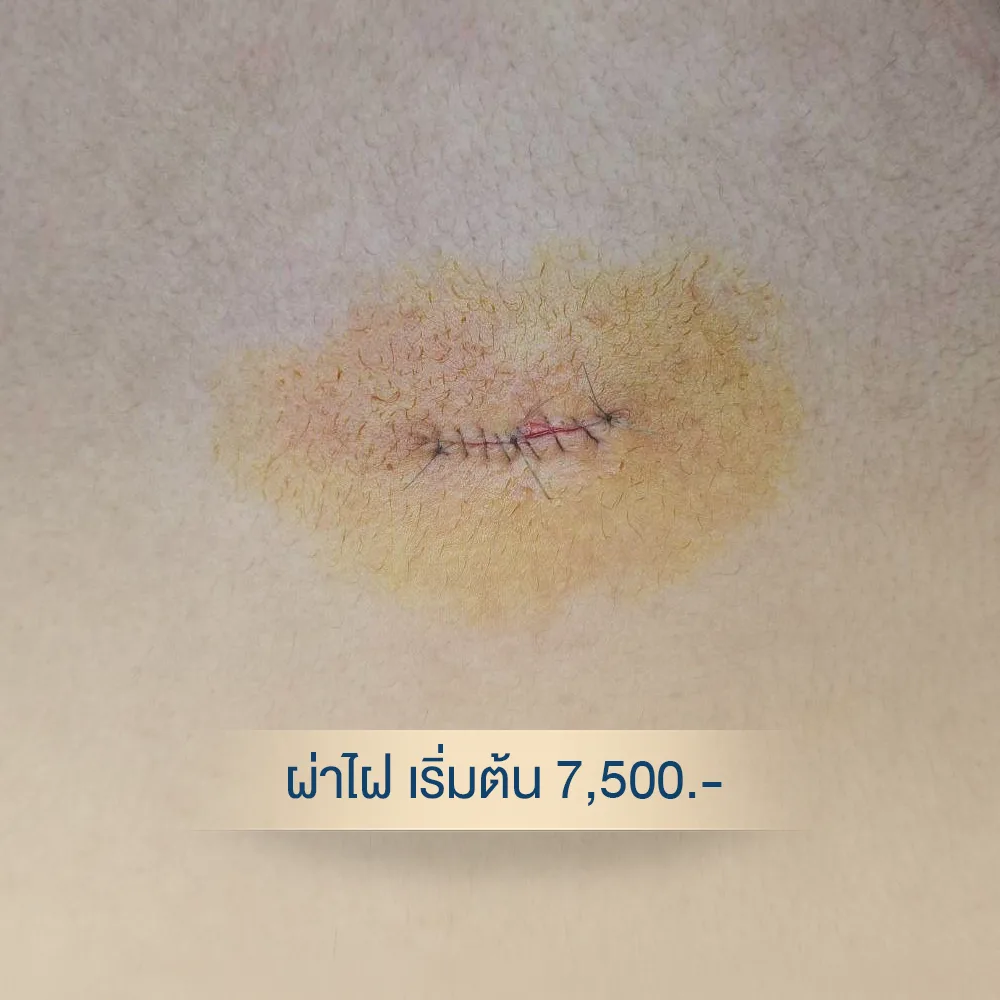
Surgical excision completely removes the problem in a single procedure.
Minor surgery involves the doctor using a small scalpel to make an incision and remove the entire mole or skin tag (including the root under the skin), then suture the wound closed.
The advantages:
- Eradicated completely; very low chance of recurrence. Because doctors can completely remove the root of moles that are deeply embedded under the skin.
- The scars appear smoother: Even though an incision is made in the skin, the doctor will suture the scar in a small, straight line, hiding it in the skin's fold.Once healed, the wound usually looks smoother and more aesthetically pleasing than if it were left as a deep pit from laser treatment. Yes
- Tissue biopsy can be performed (very important!): Some large moles may have abnormal cell changes, so surgery will provide a healthy tissue sample. Submitted for laboratory testing to screen for skin cancer. okay
weakness:
- Sutured wounds require care: Patients must be careful to keep the wound dry in the initial period and must return to the doctor for suture removal (approximately 5-7 days or 14 days, depending on the location).
- It takes a little longer to make: Sterile equipment must be prepared, and time is needed to create a beautiful suture.
💡 The doctor gave an example for comparison. Surgery It's like using a shovel to dig out a weed, root and all. The ground may have small cracks from the digging, but we can fill them in with soil (seal the wounds) to make it smooth again. And you can rest assured that this weed won't bother you again.
![Don't want to lose confidence when wearing a t-shirt because of skin tags on your neck? [Read this review]](https://dloveveryclinic.com/wp-content/uploads/2025/07/case-93-before-after-1.webp)
![[Mole and freckle removal review] Little Ikkyu wants to look beautiful before going on stage. Small or large moles, we can handle it! Co2 laser takes care of it.](https://dloveveryclinic.com/wp-content/uploads/2025/07/case88-co2-laser-1.webp)
![[CO2 Laser Review] Want clear, blemish-free skin? Want to get rid of freckles and skin tags? Get laser treatment at D'Lovevery Clinic and see results in just one session.](https://dloveveryclinic.com/wp-content/uploads/2025/07/co2-aser-review-case-159-before-after-1.webp)