

What is a flu vaccine?
The influenza vaccine used in Thailand is made from inactivated viruses and is an injectable vaccine designed to protect against 3-4 influenza strains, based on the recommendations of global influenza surveillance agencies that predict the most significant outbreaks of the year.
Influenza vaccination effectively stimulates immunity against potential seasonal influenza viruses, reducing the risk of complications for vaccinated individuals.
Influenza is a disease where the virus strains are constantly evolving, meaning new strains may emerge each year. For 2023, a total of four influenza virus strains were detected, divided into two main groups:
- Virus type A, strain Victoria (H1N1) (an A/Victoria/4897/2022 (H1N1) pdm09-like virus)
- An A/Thailand/8/2022 (H3N2)-like virus.
- Austrian lineage B virus (a B/Austria/1359417/2021 (B/Victoria lineage)-like virus)
- Type B virus, Phuket strain (a B/Phuket/3073/2013 (B/Yamagata lineage)-like virus)
The existence of diverse strains means that vaccine production must take these strains into account to ensure the best possible protection against the disease. This is why regular annual influenza vaccinations are necessary to respond to potential changes in viral strains.
Where should I get the vaccine?
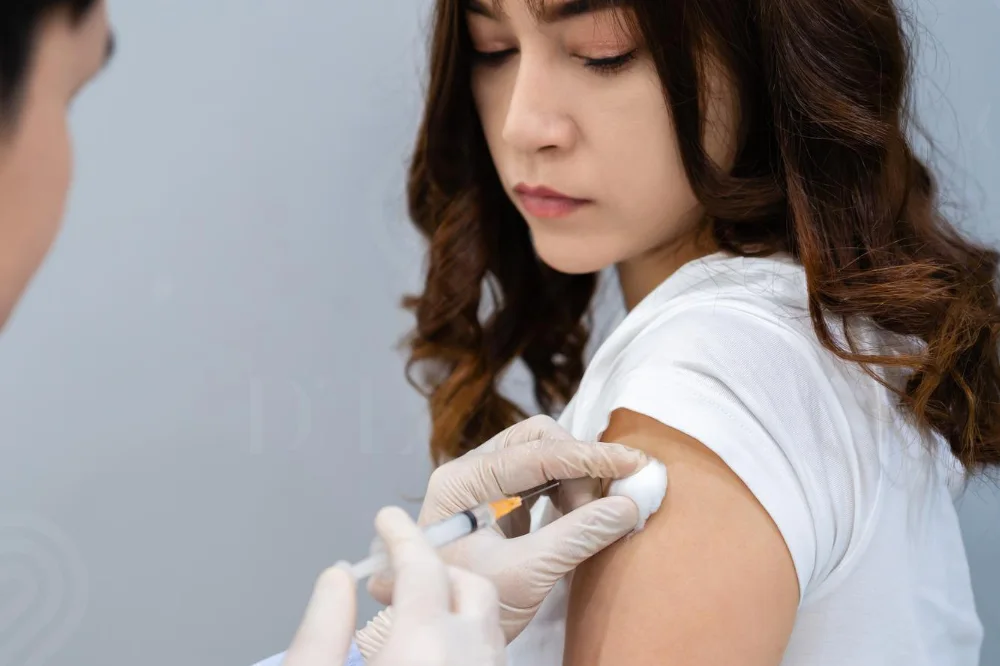
It is usually injected into the muscle of the upper arm, but for infants and young children, it is injected into the muscle of the thigh.
How many times or doses of the flu vaccine are needed?
The number of flu shots required each year may vary depending on an individual's age and health status. The following table summarizes the recommended number of flu shots for different age groups.
| ช่วงอายุ | Recommended number of injections |
|---|---|
| 6 months – 8 years | Received the first dose of the vaccine, consisting of two injections one month apart. |
| 6 months – 8 years | 1 dose (if you have previously received a flu vaccine) |
| 9 years and up | 1 injection |
Children aged 6 months to 8 years who have never received the flu vaccine or have an unclear vaccination history will need to receive two doses. The second dose will be given approximately 4 weeks after the first to maximize the effectiveness of the immunity.
Influenza (flu) is a disease caused by a type of virus that can cause illness ranging from moderate to life-threatening. The virus spreads through the respiratory system, including the nose, throat, and lungs.

How dangerous is the flu (influenza)?
- It can trigger asthma attacks.
- Inflammation of the bronchioles occurs.
- An infection occurred in the ear canal and nasal cavity.
- This can lead to abnormal heart function.
- This can lead to pneumonia.
Therefore, it is important to prioritize the timely prevention and treatment of influenza to avoid the risk of potential complications.
Things to know before getting the flu vaccine.
- Do I need to get the flu vaccine every year? The vaccine strains can change each year. According to the World Health Organization and the Centers for Disease Control and Prevention, it is recommended to get vaccinated annually to reduce the risk of contracting the flu.
- Influenza vaccines do not provide 100% protection against the virus, but they do help reduce the chances of developing complications from the flu.
Who should not get the flu vaccine?
- Children under 6 months of age; individuals with a history of chicken or egg allergies.
- People who have a history of allergic reactions to the flu vaccine.
- People who have recently recovered from an acute illness within the past 7 days.
- Individuals who have uncontrolled conditions or whose conditions worsen during the vaccination period.
Instructions before receiving the flu vaccine.
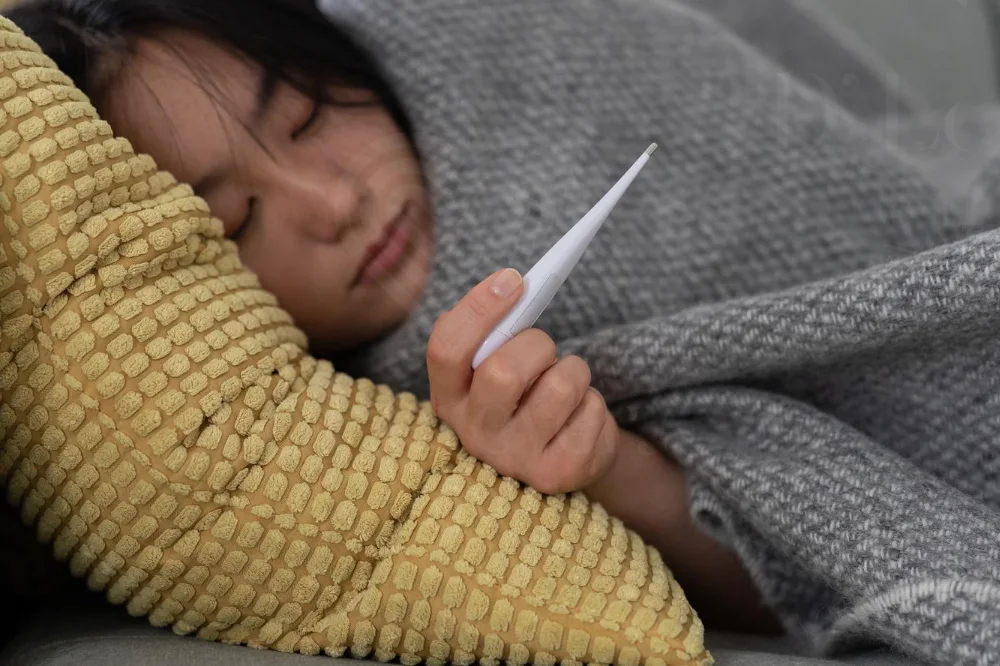
You should inform your doctor about any allergies to medications and food before receiving vaccinations, as there may be potential side effects such as swelling, redness, or lumps at the injection site, fever, headache, or muscle pain. These symptoms usually occur about 1-2 days after the vaccine and will disappear on their own. If you are taking any other medications or have any other underlying medical conditions, you should also inform your doctor in detail before treatment.
Steps for receiving vaccination services.
AtD' Lovevery Clinic Influenza vaccinations are available, and the service procedure is as follows:
- Pre-vaccination health assessmentPrior to vaccination, medical personnel will conduct a general health assessment and check for any allergies to medications or vaccines to ensure the safety of the vaccination.
- Prepare the injection site.The injection site, usually on the upper arm, will be cleaned with alcohol to prevent infection.
- VaccinationThe vaccine will be injected into the prepared muscle area using appropriate technique to minimize pain and any potential swelling or irritation.
- Post-injection follow-up.After vaccination, recipients may need to wait in a monitoring area to check for any abnormalities, such as allergic reactions to the vaccine. This usually takes about 15-30 minutes.
- Post-injection instructions.Medical personnel will provide instructions on what to do and what not to do after vaccination, including how to manage potential side effects such as pain at the injection site or a slight fever.
What are some possible side effects of the flu vaccine?
After receiving the flu vaccine, you may experience minor side effects, which are normal and usually disappear on their own within 1-2 days. Common side effects include:
- Pain, swelling, and redness at the injection site.
- Tired, lacking energy.
- Mild headache
- Muscle pain
- Slightly nauseous.
- Low-grade fever (below 38 degrees Celsius)
However, if you experience severe symptoms such as difficulty breathing, palpitations, a rash spreading across the body, or swelling of the face or mouth, you should see a doctor immediately, as these may be severe allergic reactions to the vaccine. This is rare, though.
In general, the benefits of getting the flu vaccine outweigh the potential risks, and these minor side effects are not dangerous. If you have any concerns or further questions, consult your doctor or pharmacist for appropriate advice.
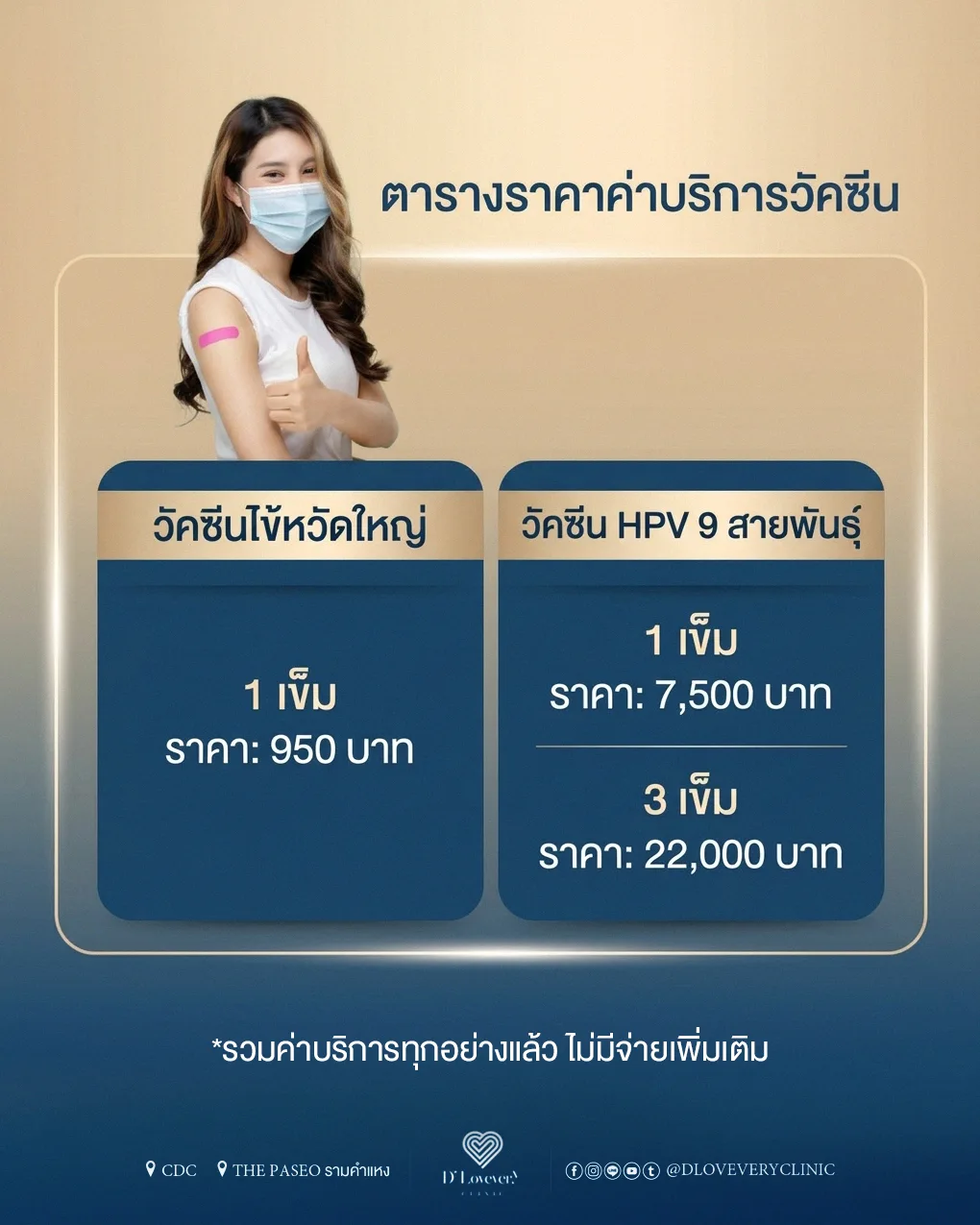
How much does a flu vaccine cost?
| Types of vaccines | Price (THB) |
|---|---|
| flu vaccine | 950 THB per person |
| Come as a family of 3 or more. | 750 THB per person |

D' Lovevery Clinic We provide services at 2 branches.


The doctor will assess each patient individually. If the patient is seriously ill, has difficulty eating, or isn't getting enough protein, further treatment may be necessary. The doctor will tell you to stop using the pen medication first. You can start again after you've recovered. But if the illness isn't severe, you know you have an infection, you can eat normally, and you sleep normally... In this case, you can continue taking the medication.
80% of patients, when they have COVID-19 and a high fever of 38-39 degrees Celsius, the first thing they worry about isn't whether the virus has affected their lungs, but rather... "Doctor, I stopped my injecting pen for 5 days. Will I gain weight?" The doctor wants to state clearly here that: Don't trick your brain into thinking you're not hungry when your white blood cells are fighting a war and need protein and energy to repair cells. Temporarily stopping medication for just 1-2 weeks doesn't ruin your metabolism, but it does. Strategies for maintaining body safety (Metabolic Preservation) To ensure your immune system functions at 100%, you should consult your doctor before stopping medication on your own if you become ill with other diseases or viral infections.
Migraines are not, and do not equal, strokes, but they are a warning sign that your cardiovascular system is particularly sensitive to stimuli. Don't panic and become afraid of living your life. Instead, turn your anxiety into a self-checklist. If you experience auras, quit smoking (including e-cigarettes), review your birth control pills with your doctor, check your blood pressure regularly, and always inform your doctor about your migraine history in detail before undergoing any medical procedures. Recognizing your body's warning signs and eliminating risk factors is key to maintaining good health and preventing stroke.
According to an epidemiological study report... American Stroke Association (ASA) A 2023 study indicated that patients with migraine with aura have a higher relative risk of ischemic stroke than the general population. 2.4 times And if the patients are in this group...Smoking combined with the use of combined hormonal birth control increases the risk by 7 to 9 times. When compared to the general population.
They may have some similar symptoms, but they are not the same disease. Many people still misunderstand this.
Herpes and shingles are caused by...Different types of viruses.Herpes simplex virus causes herpes simplex virus and usually appears as small clusters of clear blisters on the lips or genitals.Superficial itching or burning sensationAnd it can recur frequently in the same place. Shingles, on the other hand, is caused by the varicella-zoster virus, the same virus that causes chickenpox. It latents in the spinal nerve ganglia and manifests as clear blisters arranged in a linear pattern along a nerve pathway on one side of the body.A severe, deep, burning pain. This is the treatment.Shingles requires antiviral medication to be administered within 72 hours.To reduce the risk of chronic nerve pain.
Many people want to be... Travel influencer The doctor said that the number one risk, besides travel safety, is endemic diseases.
For vaccinations before traveling abroad, you should consult a doctor four to six weeks in advance because the body needs time to recover. 10-14 days To build immunity, some vaccines require more than one dose. Vaccines are divided into three main groups, including those mandatory under international law, such as...Yellow fever vaccine is required for travelers to Africa and South America. Recommended vaccine combinations are based on area risk and activities, similar to hepatitis A, typhoid, and rabies vaccines. And basic vaccines that should be boosted, such as those for influenza and tetanus, should be administered to ensure maximum travel safety.
Yes, you can get the injection.
- flu vaccine
- pneumococcal vaccine
- Diphtheria-Tetanus-Pertussis Vaccine
- COVID-19 vaccine
Many people still hold onto the old misconception that vaccines must be spaced months apart due to fears of immune system conflicts or the body not being able to handle it. But in reality... Our human immune system encounters millions of pathogens and foreign substances in the air and food every day. Receiving two inactivated vaccines simultaneously is a very minor task for the immune system. It's something doctors always advise patients against, and it's not dangerous. But it's about lifestyle and quality of life after the injection. separate
Due to the current generation of shingles vaccines... Shingrix It is a subunit vaccine containing a relatively high concentration of adjuvant to achieve a efficacy rate of over 90%. Regarding side effects... Arm soreness and fatigue are therefore more noticeable with this vaccine than with other vaccines. Doctors often tell patients straightforwardly that if they have an important event, a flight, or need to lift heavy objects the next day, getting two injections at once might interfere with their daily life. However, if they have ample rest, the injections can be completed on the same day. The most worthwhile investment of time. Because early prevention of shingles means protecting yourself from the debilitating chronic neuropathic pain (PHN) in the future as well.
That's true. Both the direct symptoms of shingles and other conditions carry a higher risk, but shingles is clear both in reality and theory.
But many people may be surprised that those who die often die from complications during treatment, especially patients with underlying conditions such as diabetes, kidney disease, lung disease, heart disease, cancer, or those using immunosuppressant drugs.
Anyone who's had shingles knows how painful it is. It's like a fire spreading across your body, along nerve pathways. The weaker your immune system, the harder it is to control this fire. The risk isn't just the agonizing pain, but also the potential for severe damage to the brain, lungs, and eyes.
The good news is... The risk can be greatly reduced by seeing a doctor early, avoiding self-medication, and planning for appropriate vaccination. If an elderly patient or family member develops a painful, burning rash in a linear pattern, don't assume it will go away on its own. Early treatment is the most valuable time. Vaccines are much more affordable these days. Typically, around 7,000-8,000 per injection. It depends on the medical facility.
The term "high risk" is appropriate. Besides temporary skin problems, there's also the risk of serious illnesses in the future if you don't change your lifestyle.
I see many patients investing in creams, serums, or procedures hoping for brighter-looking skin, but only getting 4-5 hours of rest. It's like buying high-quality home furnishings but refusing to repair the cracks inside. Regularly sleeping less than 5 hours can lead to dull skin, puffiness, acne breakouts, and slower recovery.
The top 5 illnesses caused by sleep deprivation are as follows:
- Type 2 diabetes and insulin resistance.
The evidence is fairly clear that sleeping less than 6 hours is associated with an increased risk of type 2 diabetes, with approximately... 30% compared to sleeping 7 hours. Yes - Obesity, especially abdominal obesity.
Short sleep periods are associated with increased hunger and abdominal fat accumulation, which are the starting point of several metabolic diseases. - High blood pressure
Sleep deprivation prevents the body from fully reducing nervous system alertness, resulting in resting blood pressure not decreasing normally. Metaanalyses have found a correlation with an increased risk of high blood pressure. - Cardiovascular disease
For example, cardiovascular and cerebrovascular diseases, where the risk factors are often accumulated through high blood pressure, high blood sugar, being overweight, and inflammation, are not solely due to lack of sleep. - Depression and mental health problems.
Meta-analysis has found that short sleep is associated with an increased risk of depression in adults, and may create a cycle where a negative mood makes it even harder to sleep.
If you want to start taking care of your skin for long-lasting results, I would recommend increasing your sleep time before increasing the number of skincare products you use, because... Good skin doesn't have to be perfect, but rather skin that recovers well in real life. The most worthwhile first goal is to gradually increase your sleep to at least 7 hours a night.
If you ask a doctor, "Which hormone causes the most mood swings?", they'll say there's more than one, but the most common one found in women is... Estrogen and progesterone Because these two are like remote controls for emotions during the premenstrual period, postpartum, and perimenopausal stages. Some people aren't weak or overthinking; their bodies are simply sending signals that their hormones are fluctuating.
Another one that the doctor wants you to be careful about is... Cortisol, the stress hormone. Because nowadays, many people don't have obvious illnesses, but they experience fatigue, shallow sleep, irritability, a tired-looking face, acne, and burnout all at once. It's like their body is constantly in survival mode. If your mood changes along with your physical changes, I recommend looking at the whole system, not just your mind. Hormones, sleep, stress, and thyroid. along the way
In summary, nowadays, the environment surrounding patients has both conscious and unconscious influences. Taking care of oneself, both physically and mentally, or making appointments with a psychiatrist is no longer unusual or shameful. In fact, it's good that you recognize that something is wrong. No matter how minor, if it bothers you, causes anxiety, or you keep thinking about it repeatedly, consulting a doctor is a very good solution.