
What are freckles? Understanding this bothersome facial problem.
Freckles are small dark spots on the skin caused by abnormal melanin production in the underlying skin layers, resulting in uneven skin tone. There are many types of freckles, each with different characteristics and causes, making them a bothersome problem for many people.
How do freckles occur? The main causes of freckles.
The majority of freckles are caused by genetics and daily lifestyle habits, divided into three main factors as follows:
- Genetics or hormones?Some people may be more prone to freckles than others due to genetic factors or hormonal changes in the body.
- Sunlight and UV radiationDirect exposure of the face to sunlight without adequate protection allows UV radiation to stimulate excessive melanin production in the skin, a major cause of freckles and melasma.
- Unsuitable skincare productsUsing facial skincare products with harsh chemicals or those unsuitable for your skin type may cause irritation and trigger the formation of freckles and melasma.
pie
    title สาเหตุที่กระตุ้นให้เกิดกระ (แม้อายุยังน้อย)
    "แสงแดดและรังสี UV" : 50
    "พันธุกรรม/ฮอร์โมน" : 35
    "ผลิตภัณฑ์บำรุงผิวที่ไม่เหมาะสม" : 15
Types of freckles: Knowing the right approach for targeted treatment.
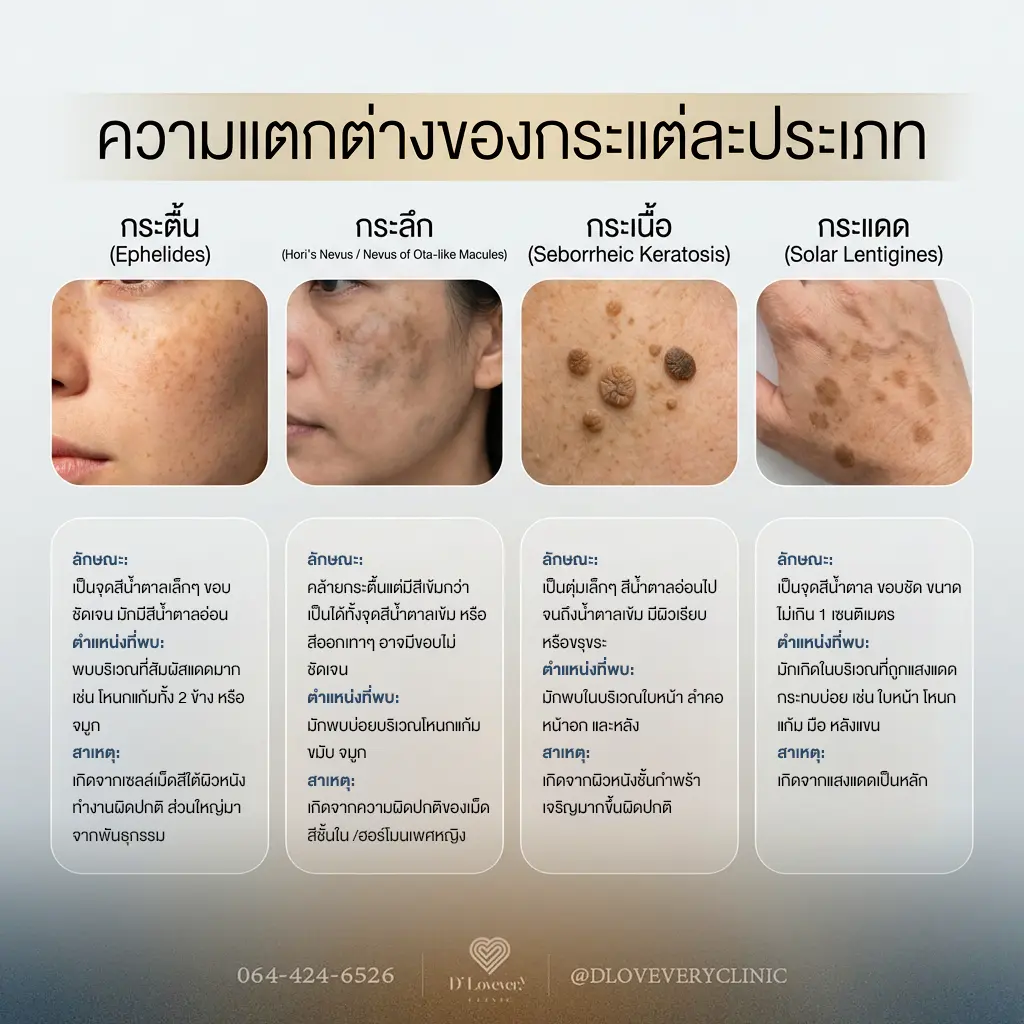
Freckles can be divided into four main types, each with different characteristics and common locations.
Ephelides
- NatureThese are small, brown spots with well-defined edges, often light brown in color.
- Location foundIt is found in areas that are exposed to a lot of sunlight, such as both cheekbones or the nose.
- causeIt is caused by malfunctioning of pigment cells under the skin, and is mostly due to genetics.
Hori's Nevus / Nevus of Ota-like Macules
- NatureSimilar to freckles but darker in color. They can be dark brown or grayish spots and may have indistinct edges.
- Location foundIt is commonly found on the cheekbones, temples, and nose.
- causeIt results from abnormalities in the inner layers of pigment and is often associated with female hormones, sunlight, certain medications, and pregnancy.
Seborrheic Keratosis
- NatureThey appear as small, light brown to dark brown bumps with a smooth or rough surface.
- Location foundIt is commonly found on the face, neck, chest, and back.
- causeThis condition is caused by abnormal overgrowth of the epidermis.
Solar lentigines
- NatureIt is a brown spot with clear edges, no larger than 1 centimeter.
- Location foundIt often occurs in areas frequently exposed to sunlight, such as the face, cheekbones, hands, and back of the arms.
- causeIt is mainly caused by sunlight.
Compare the characteristics of freckles in Europeans and Asians.
| Characteristics/Factors | Freckles in Europeans | Freckles in Asians |
|---|---|---|
| Common types of freckles. | EphelidesFreckles caused by genetics and sunlight. Solar lentiginesSun spots | Solar lentiginesSun spots Hori's Nevus / Nevus of Ota-like MaculesFreckles with pigment located in deeper layers of the skin. Melasma (Melasma)Often found together. |
| color | They are usually light brown to dark brown. | They are usually dark brown, gray, or in some cases, dark purplish (especially deep freckles). |
| Pigment depth | Pigment is primarily found in the epidermis (the layer of skin that contains pigments). | Pigmentation can occur in the epidermis or deeper into the dermis, especially in deep freckles. |
| Reaction to sunlight | – It becomes more noticeable when exposed to sunlight. – It may fade on its own when not exposed to strong sunlight. | – It becomes more noticeable when exposed to sunlight. – They tend to become darker and more permanent more easily. – Deep pigmentation often does not fade on its own. |
| heredity | It is highly related to genetics (especially for shallow wounds). | It is related to genetics and other factors such as hormones and inflammation. |
| Response to treatment | They often respond well to lasers that target pigment in the superficial layers. | A laser with the appropriate wavelength for the depth of the pigmentation is required, and a combination of treatments may be needed for best results and to minimize recurrence. |
| Risk of post-inflammatory hyperpigmentation (PIH). | It is less risky. | There is a higher risk of developing post-inflammatory hyperpigmentation, especially if the treatment is inappropriate. |
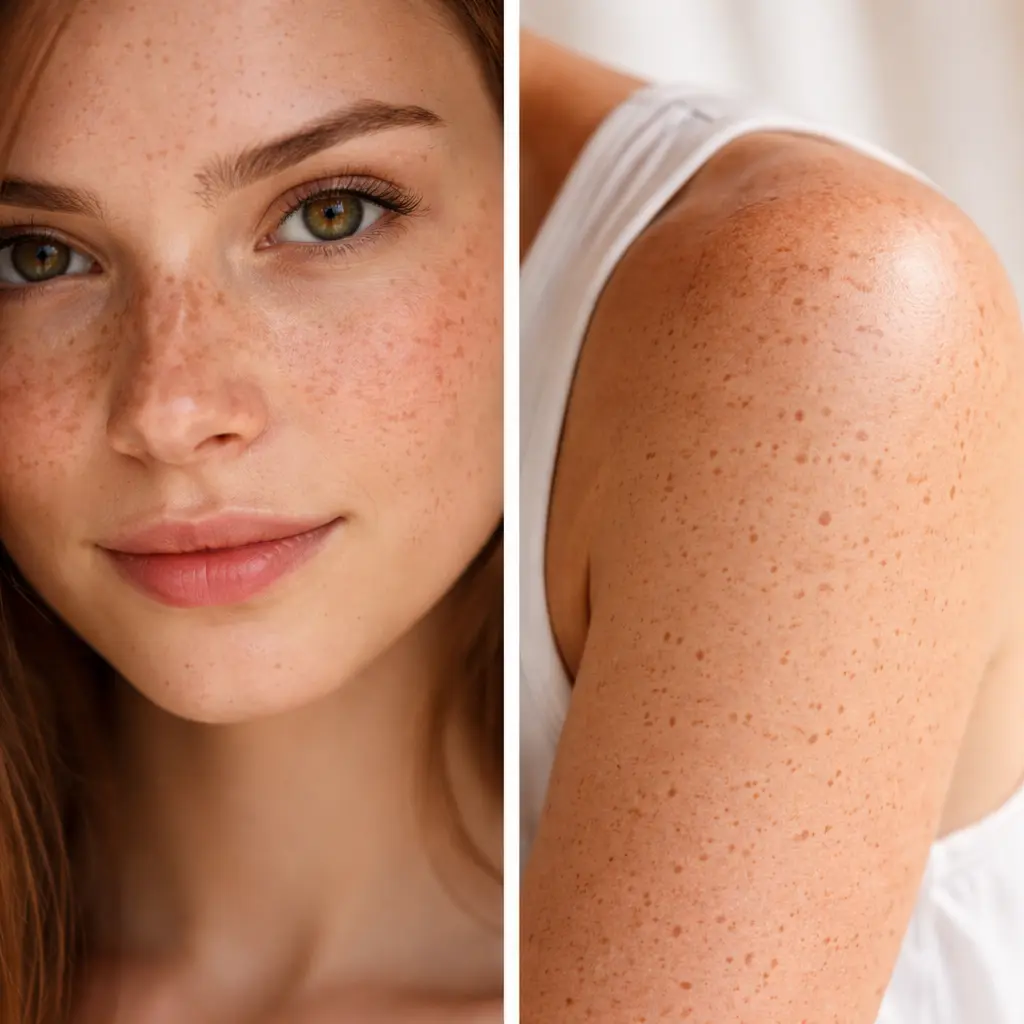
Compare freckles on the face vs. freckles on the body (shoulders, upper back).
| Characteristics/Factors | Freckles found on the face. | Freckles found on the torso (shoulders, back of hands). |
|---|---|---|
| Common types of freckles. | EphelidesLight brown spots with clear edges. Solar lentiginesBrown spots with well-defined edges, larger than shallow spots. Hori's NevusGray/dark brown spot with indistinct edges. Melasma (Melasma)Larger patches than freckles, often found on the cheekbones and forehead. | EphelidesSmall, light brown spots. Solar lentiginesBrown spots are clearly visible and increase in size and number with age. Seborrheic KeratosisBrown/black, rough-textured bumps are more common with age. |
| Main cause | sunlightExposure to sunlight continuously. Genetics/HormonesEspecially deep freckles and melasma. inflammationFrom acne and friction. | sunlightExposure to more accumulated and intense sunlight, especially during outdoor activities. heredity ageSkin degeneration |
| ลักษณะเฉฟ | – They are usually small to medium in size. – Light to dark colors – Some types have clear boundaries, while others do not (e.g., haze). | – They typically range in size from small to larger with age. – Light brown to dark brown – They usually have clear boundaries. |
| Distribution | – They tend to be concentrated around the cheekbones, nose, and forehead (areas directly exposed to sunlight). – Freckles are often found on the cheekbones and temples. | – Distribute in areas where clothing is exposed to sunlight, such as shoulders, arms, and backs of hands. |
| Concern | – Beauty - Evenness of skin tone. – Indicates other skin problems as well (e.g., acne, sensitive skin). | – Beauty – This could be a sign of accumulated sun damage. – Skin tags may change with age. |
| Response to treatment | - Good for PICO laser treatments (both toning and fractional). – Combination treatments often yield better results. | – Sunspots often respond well to laser treatment. – Skin tags can be removed with a CO2 laser or cauterization. – The skin on the body tends to recover slightly slower than the skin on the face. |
| Risk of recurrence | – Tall if not protected from sunlight. Hormones and genetics can influence the recurrence of freckles and melasma. | – High risk of death if exposed to sunlight continuously without protection. |
Current interesting methods for treating freckles.
Multi-Layer Freckle Therapy for beautiful, freckle-free skin.
Our combination treatment is a process of properly exfoliating dead skin cells and pigmentation while simultaneously caring for and rejuvenating the skin layers. Our expert physicians will design a personalized treatment program incorporating a variety of techniques, such as:
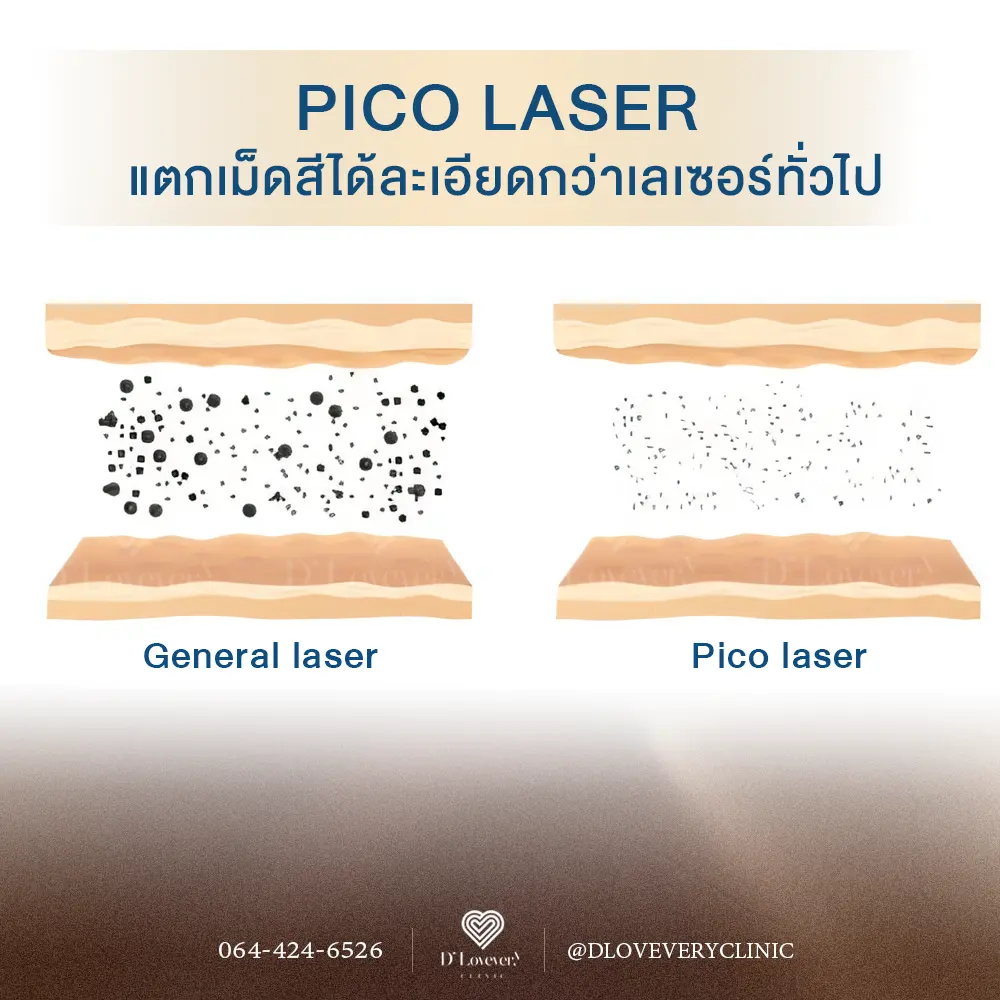
- Laser technology (Pico Laser)This is a laser with a short wavelength in the picosecond range, which can quickly and precisely break down pigment particles into tiny pieces more effectively than other types of lasers. It disrupts the pigment circuit and dissolves pigment in deeper layers of the skin than topical medications can reach, resulting in faster results, less skin damage, and fewer side effects.
- Sun peeling patchesFor sunspots with well-defined boundaries, laser treatment, topical medication, and skin patches (applied for 14 days and then peeled off) are safe options, as these are medical devices.
- Melanin inhibitor drugsTo control the overactivity of melanin-producing cells and prevent the recurrence of freckles and melasma.
- Outer skin rejuvenation programGently exfoliates dead skin cells, reduces stubborn dark spots on the surface, and strengthens the skin barrier, resulting in healthier and brighter new skin.


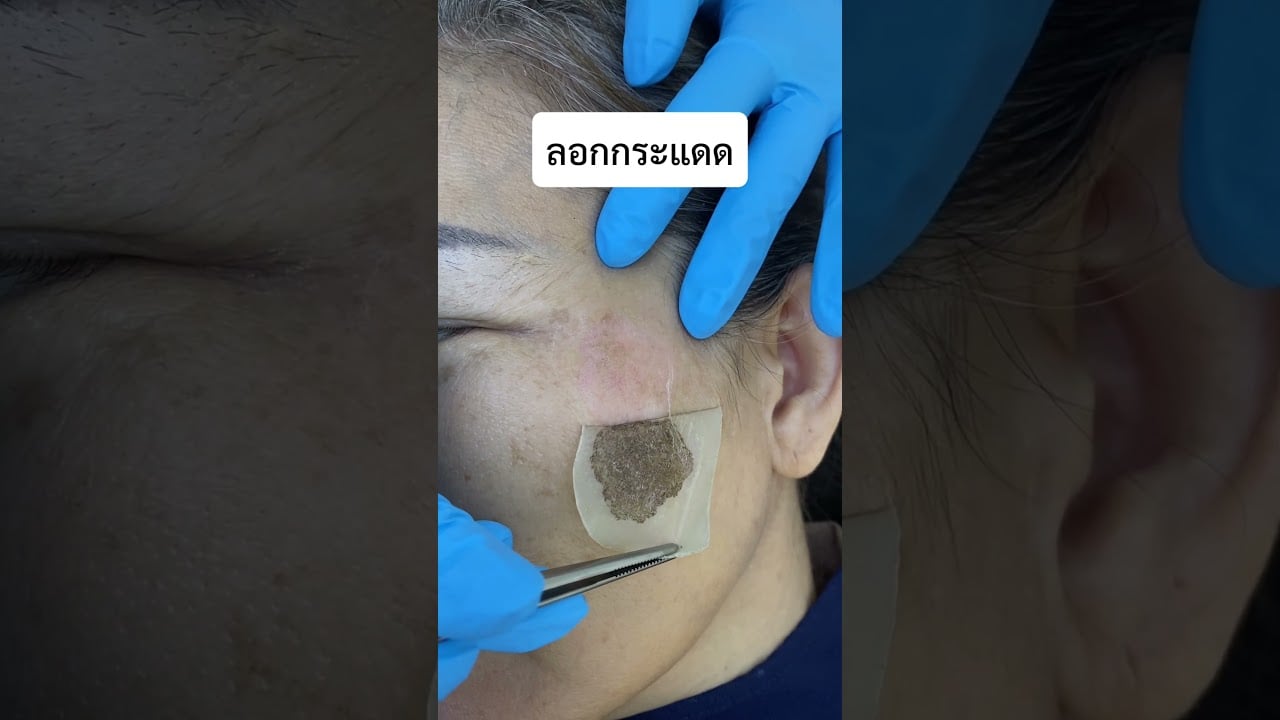
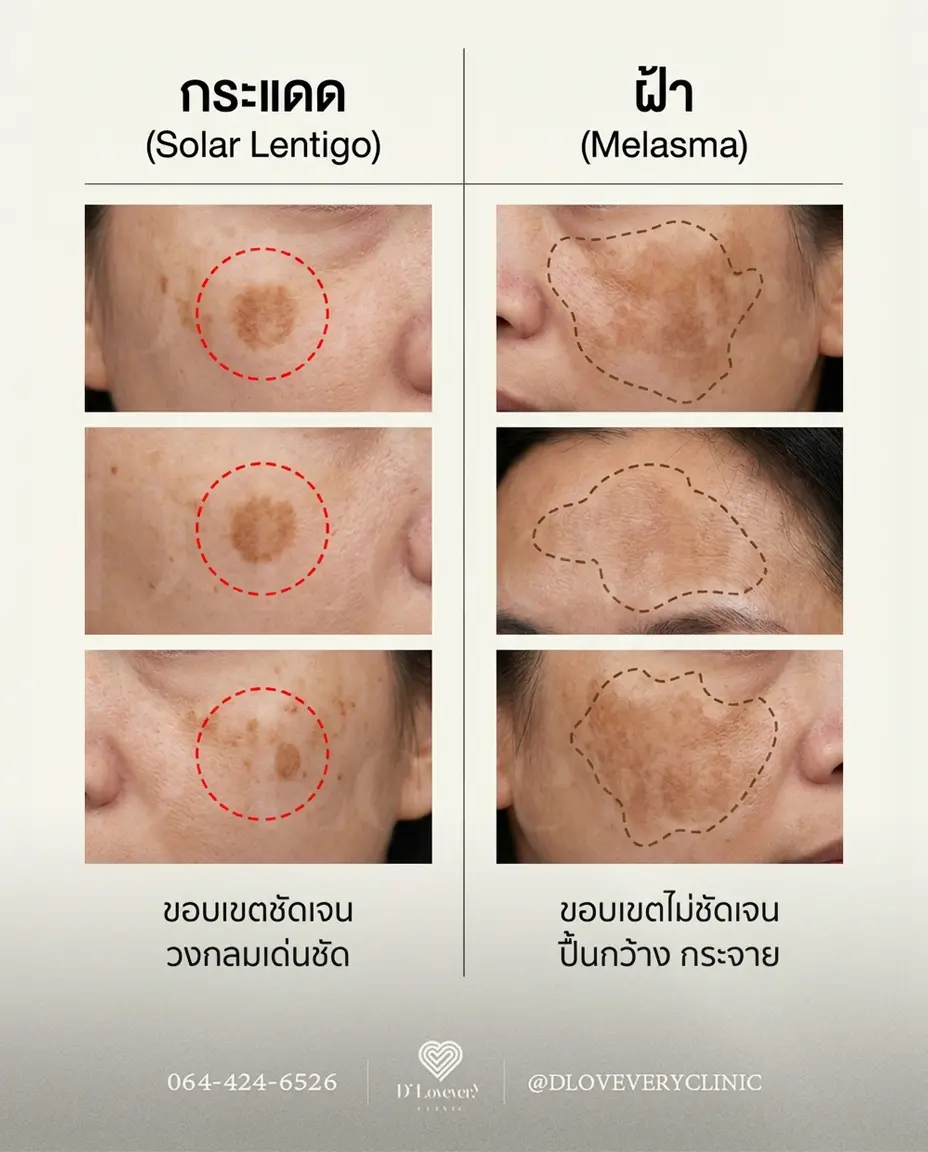
Only freckles with well-defined borders, like those pictured, can be treated with chemical peeling techniques.D' Lovevery Clinicokay
How much does it cost to peel off sunspots and dark spots?
| Size of sunspots (size comparison) | Treatment cost (THB) |
|---|---|
| Smaller than or equal to 50 satang coin | 1,500.- |
| Smaller than or equal to 1 THB coin | 2,500.- |
| Smaller than or equal to 5 THB coin | 3,500.- |
| Large size, or other types. | Send the photos to the doctor for a price estimate. |

Things to know: Post-peeling skincare for sunspots.
1. Possible symptoms after the procedure (normal symptoms).
- Slightly reddened skin: This may occur during the first 1–3 days.
- Skin feel: You may feel a slight warmth or stinging sensation on your skin during the first 1-3 days.
- Skin peeling: Some minor peeling may occur within 3–7 days.
- The mark darkens temporarily: The marks may appear darker initially before gradually fading.
- ⚠️ Precautions: If you experience severe swelling, a rash, or intense burning, contact the clinic immediately.
2. Care during the first 48 hours (critical period).
- Caring for silicone sheets: Do not remove the silicone sheet before the specified time.
- 1-3 days If lymphatic fluid seeps out, it is normal. The silicone sheet contains nourishing and sun-protective ingredients and will safely absorb the lymphatic fluid without harm.
- Keep it dry: Try to keep the silicone sheet from getting wet as little as possible.
- Avoid direct sunlight. And refrain from scrubbing or exfoliating your skin or face.
- Products to avoid: Avoid using products containing alcohol, AHA/BHA, retinol, or high concentrations of vitamin C.
- Cleansing and moisturizing: Wash your face with a gentle cleanser and apply moisturizer regularly to maintain hydration.
3. Preventing sunspots from recurring (very important).
- Apply sunscreen with SPF 50 every day. Even when indoors or in a building.
- Reapply every 4 hours. When exposed to sunlight or outdoors.
- Protective equipment: Wear a hat, a mask, or use an umbrella when outdoors.
- Avoid heat: For example, going to a sauna or spending a lot of time in the sun.
4. Additional tips for healthy skin.
- Drink clean water: Drink 1.5–2 liters per day and get enough rest.
- Do not pick, scratch, or pull at the scabs: To prevent inflammation and dark spots.
- Follow the program consistently: Follow your doctor's instructions for best results.
Why do "combination" treatments yield better results?
Because pigmentation problems aren't just limited to the surface layer of the skin, they can sometimes be associated with broken capillaries under the skin. A single treatment might not be able to address the root cause of the problem comprehensively. A combination of treatments allows for a holistic approach to skin care, addressing issues such as destroying existing pigment, inhibiting new pigmentation, and strengthening the skin. This results in a smoother, more natural-looking complexion that doesn't thin the skin in the long term.
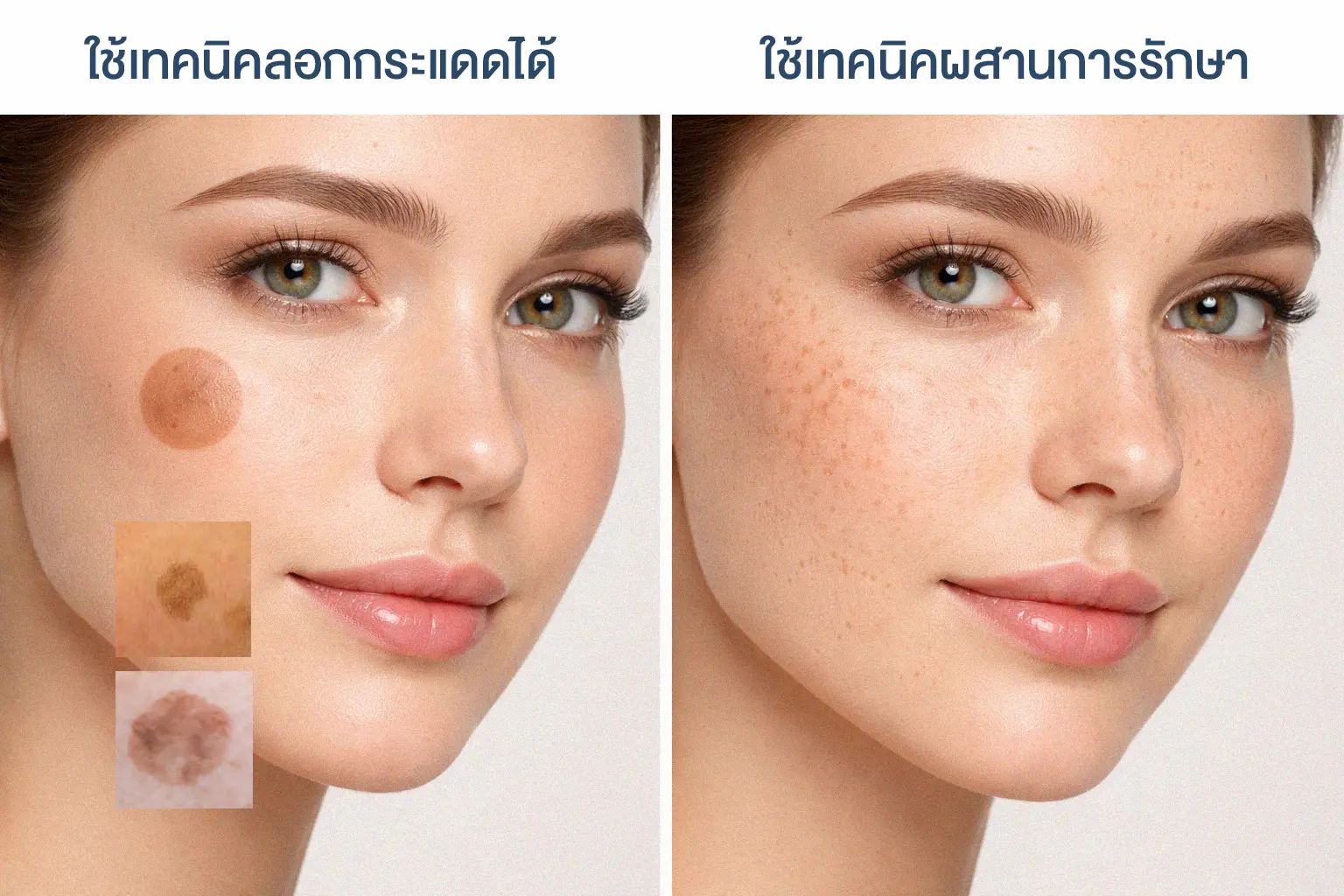
Pico Laser for treating freckles
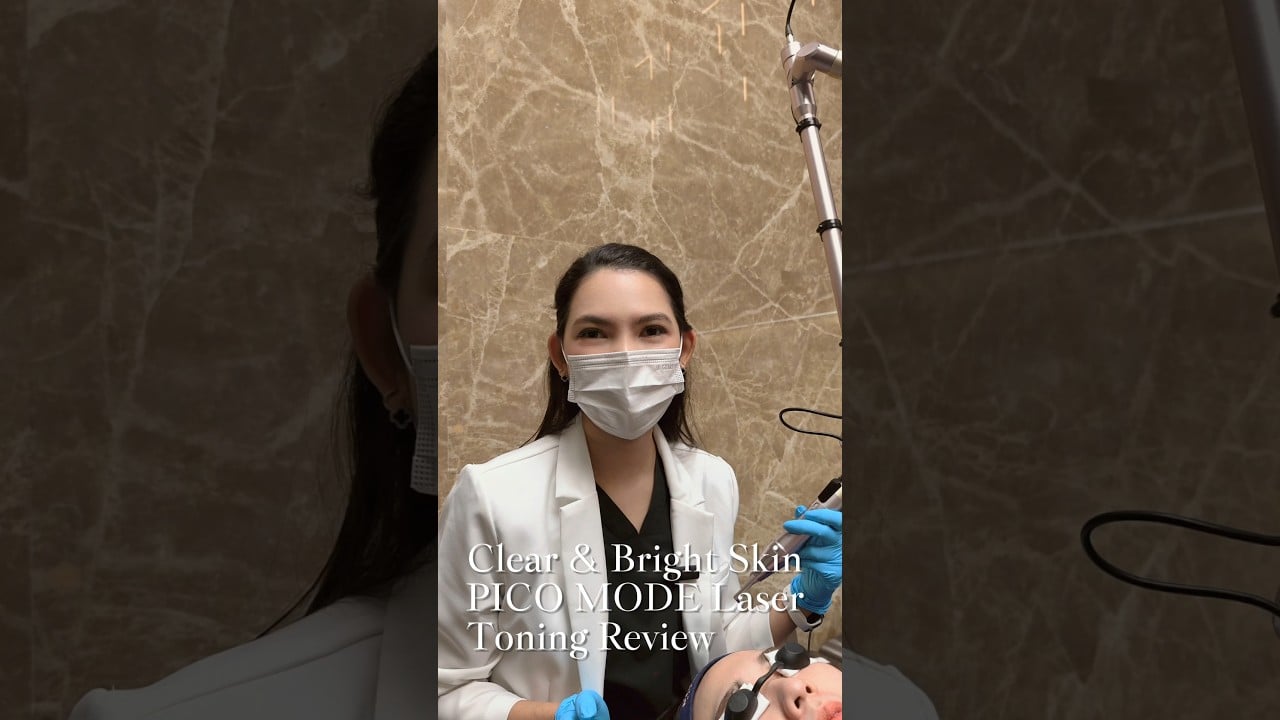
Currently, there are various methods to treat freckles, from applying moisturizing creams to using medications, but the technology that is widely accepted and shows the most noticeable results is... Pico Laser This laser, with its short wavelength in the picosecond range, can quickly and precisely break down pigment particles into tiny pieces compared to other types of lasers. This results in faster results, less skin damage, and fewer side effects.
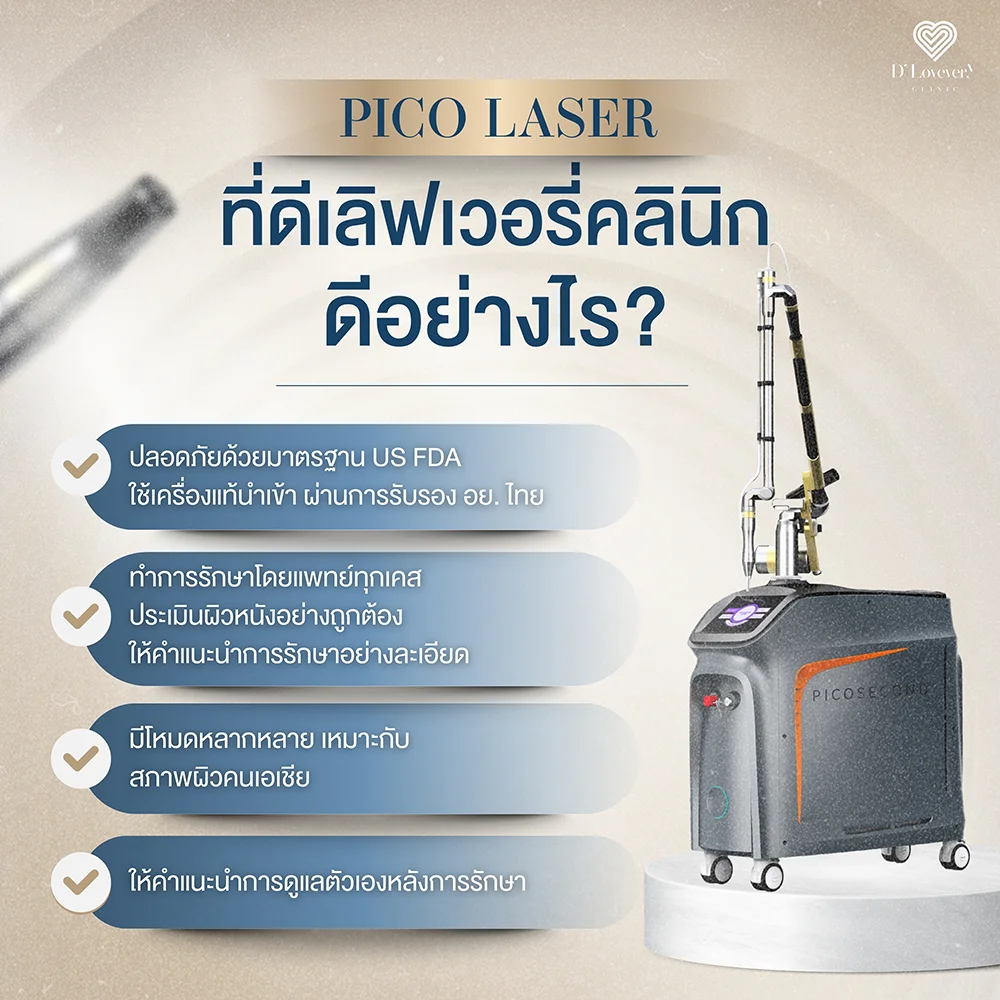
Dlovevery PICO is a laser technology that utilizes the photoacoustic effect, emitting high-frequency light energy in very short bursts, in the picosecond range (10⁻¹² seconds). This causes vibrations directly affecting the pigment (photomechanical effect), unlike older lasers that primarily used heat (photothermal effect).
Key features of Dlovevery PICO
- Pulse Width 350 PS: The very short wavelength allows for high energy precision and reduces side effects.
- 5 wavelengths: It covers the treatment of a wide range of skin problems.
- 532 nm: Suitable for shallow pigmentation such as freckles and redness.
- 755 nm: Suitable for darker pigments such as freckles and black/blue tattoos.
- 1064 nm: Suitable for deep-seated pigmentation, such as in tattoos and deep freckles.
- 585 nm, 650 nm: Suitable for colored tattoos (green, blue, yellow, red).
How many laser treatments are needed to see results? Treatment duration.
Pico Laser treatment can show results from the first session; however, the most noticeable results depend on each individual's skin condition.
- The problem isn't severe.Results may be visible within 1-3 treatments.
- Deep or persistent problemsIt may be necessary to repeat the process 3-5 times, or even more, to achieve the best results.
You should consult a specialist doctor to assess the correct and appropriate treatment for your skin condition.
How much does laser treatment for freckles cost?
| Skin problems/treatment | Price per session. | Price for a 5-session course. |
|---|---|---|
| tone | ||
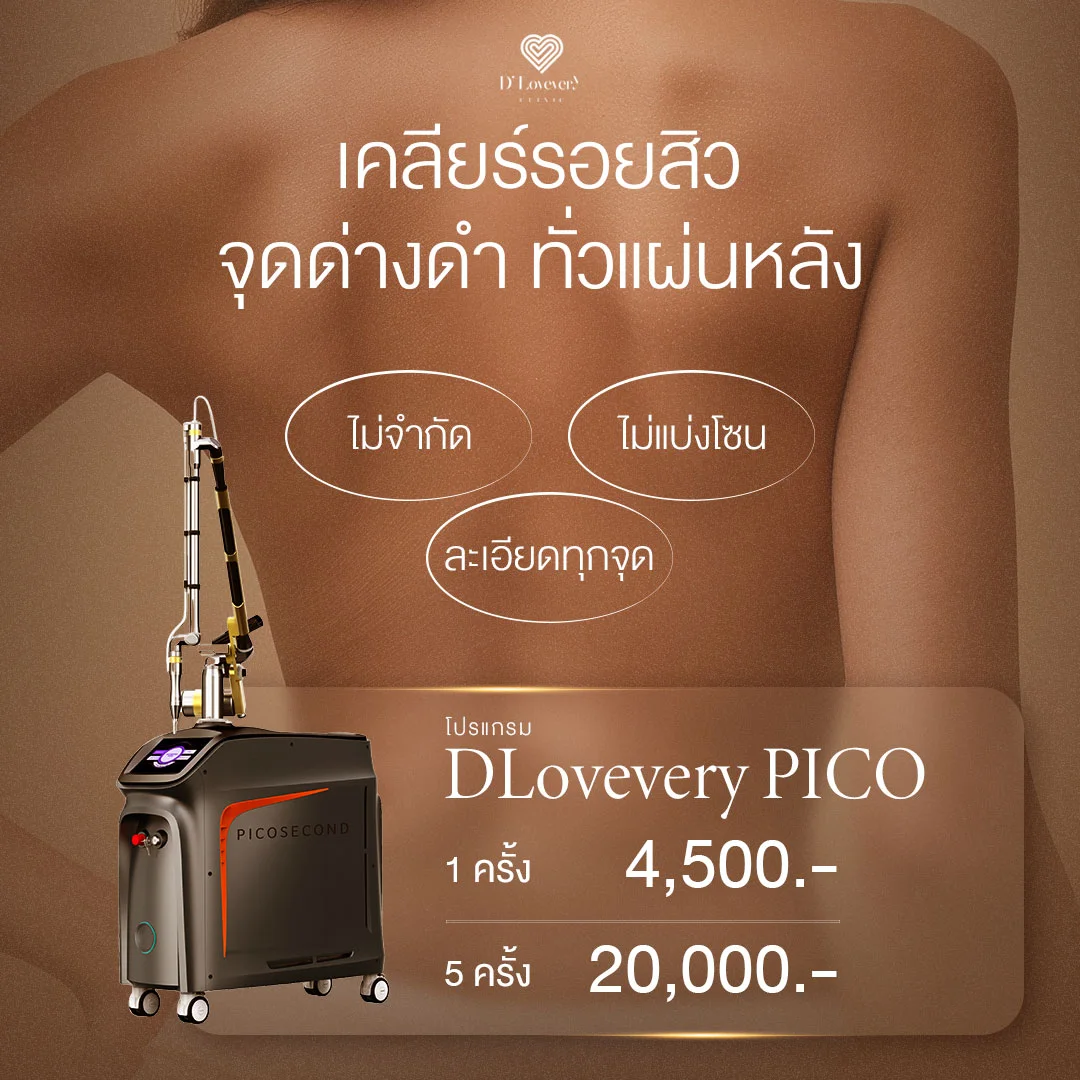
| Freckles/age spots | 4,500.- | 20,000.- |
| จุดด่างดำ | 4,500.- | 20,000.- |
| Acne scars/dark spots | 4,500.- | 20,000.- |
| Tighten pores | 4,500.- | 20,000.- |
| Dull skin | 4,500.- | 20,000.- |
| fractional | ||
| Fractional Mode | 5,500.- | 22,000.- |
| Scar | ||
| แผลเป็น | Starting at 1,500.- | Starting at 6,000.- |
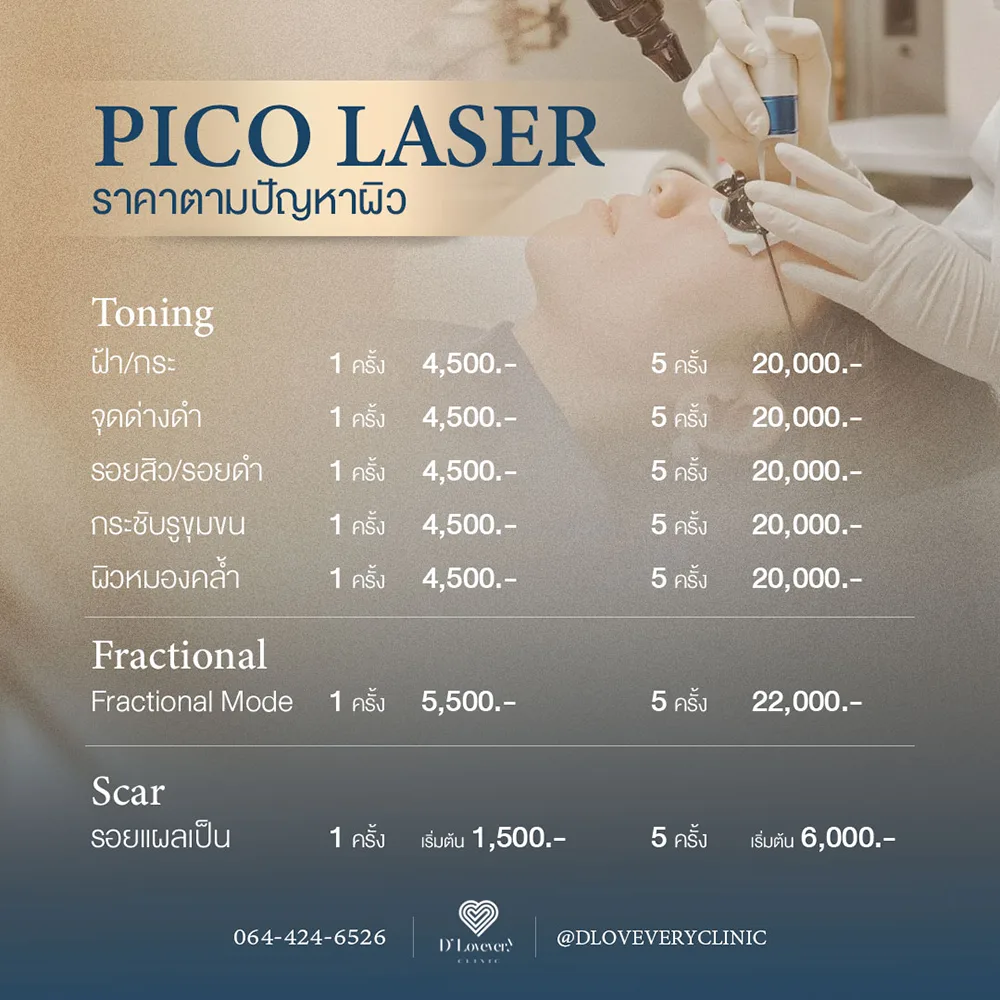
The price of laser treatment for freckles depends on the treatment area, the number of sessions, and the severity of the freckles. The starting price may vary depending on the doctor's assessment. For promotions and the best value prices, please inquire at D' Lovevery Clinic.
Preparation before and after laser treatment for freckles to achieve the best results.
Things to know before getting laser treatment for freckles and melasma.
Proper preparation helps ensure effective and safe treatment.
- Consult a doctor.The most important thing is to consult a doctor to assess your skin condition, analyze the type of freckles, and plan appropriate treatment.
- Please provide your medical history.Inform your doctor about any medications you are currently taking, skincare products you use, and any other medical history you have had.
- Avoid using certain medications.Your doctor may recommend that you stop using certain medications, such as peeling creams, acne medications, or some types of birth control pills.
- No makeupOn the day of your treatment, please refrain from wearing makeup.
- Avoid sunlight.Avoid direct sunlight or apply sunscreen with an SPF of 30 or higher for at least one week before laser treatment.

How to take care of yourself after laser treatment for freckles.
Post-laser skin care is crucial for proper skin recovery and long-lasting results.
- Avoid direct sunlight as much as possible.Apply sunscreen with an SPF of 30 or higher daily and wear a wide-brimmed hat to protect yourself from the sun.
- Avoid activities that cause excessive sweating.For example, avoid strenuous exercise to prevent irritation.
- Avoid using products that irritate the skin.Avoid products containing AHA, BHA, high concentrations of Vitamin C, or ingredients that may irritate the skin.
- Attend your doctor's appointment.To monitor treatment results and continuously assess skin condition.
Frequently asked questions about laser treatment for freckles.
| Things you should know | The description |
|---|---|
| Is laser treatment painful? | Laser treatment for freckles can be slightly painful during the procedure, but the level of pain varies depending on the type of laser and individual skin sensitivity. A numbing cream is generally applied before treatment to minimize discomfort. |
| How many laser treatments are needed to see results? | Results can be seen after approximately 3-6 treatments, depending on the severity and amount of freckles, and the type of laser used. |
| Do laser treatments really work for freckles? | Laser treatment for freckles can be effective in removing or fading freckles, especially sun freckles caused by excessive melanin accumulation. Results depend on several factors, including the type of laser, intensity, and number of treatments. |
| How many laser treatments are needed for sunspots? | Generally, 3-6 laser treatments for removing sunspots are recommended, spaced 4-6 weeks apart. The actual number of sessions required depends on the severity of the sunspots and the desired results. |
| What should you avoid after laser treatment? | Avoid direct sunlight, hot showers, or washing your hair until the redness subsides. Also, avoid rubbing or scratching the skin vigorously, as this may cause irritation. |
| Is laser treatment for skin tags painful? | (The information in the references is not explicitly stated, but generally, laser treatment for skin tags may feel similar to other types of laser treatment for freckles: slightly painful and with the use of topical anesthetic.) |
| What foods can help reduce freckles and melasma? | Vitamin cHelps reduce skin pigmentation (found in fresh fruits). Vitamin EHelps reduce the abnormal process of skin pigmentation (found in various plants). GlutathioneHelps reduce melanin production (found in leafy green vegetables, soybeans, and peas). Drink plain water.Helps eliminate waste from the body. |
| What helps reduce freckles? | - Skin care products containing natural extracts such as vitamin C, ascorbic acid, and arbutin. – Sunscreen with a high SPF value that provides good UVA/UVB protection. – Avoid prolonged exposure to direct sunlight. – Maintain adequate hydration in the body. |
| Does taking collagen help reduce wrinkles? | Collagen doesn't directly reduce freckles or melasma, but it helps nourish the skin, keeping it moisturized and slowing down skin cell aging. This indirectly helps reduce wrinkles, dark spots, and sun-induced freckles. |
| Will freckles reappear after laser treatment? | Laser treatment can permanently remove freckles, but genetic factors, hormone levels, or unprotected sun exposure may cause them to reappear. |
Reviews of treatments for sunspots, skin tags, sun freckles, and genetic melasma.
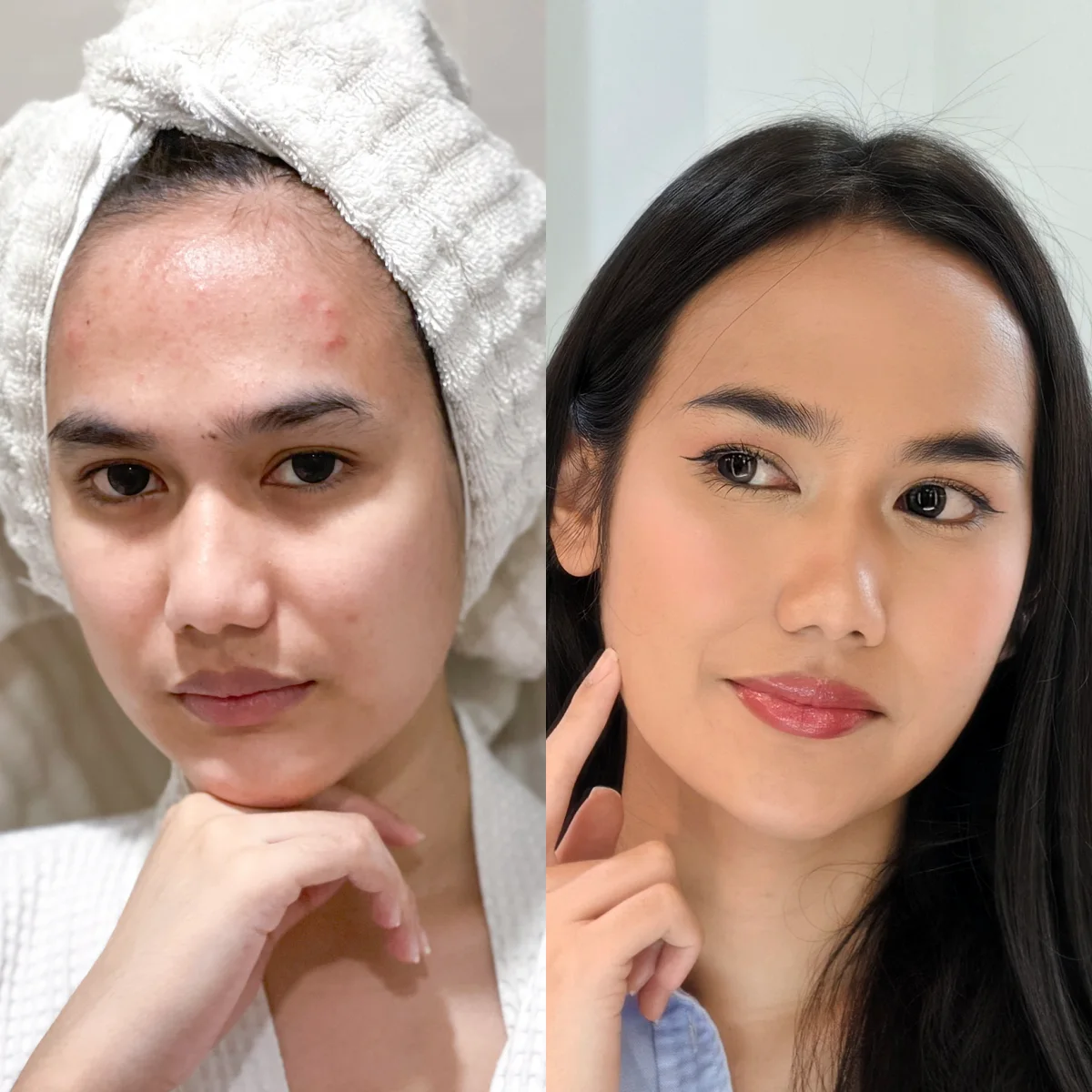
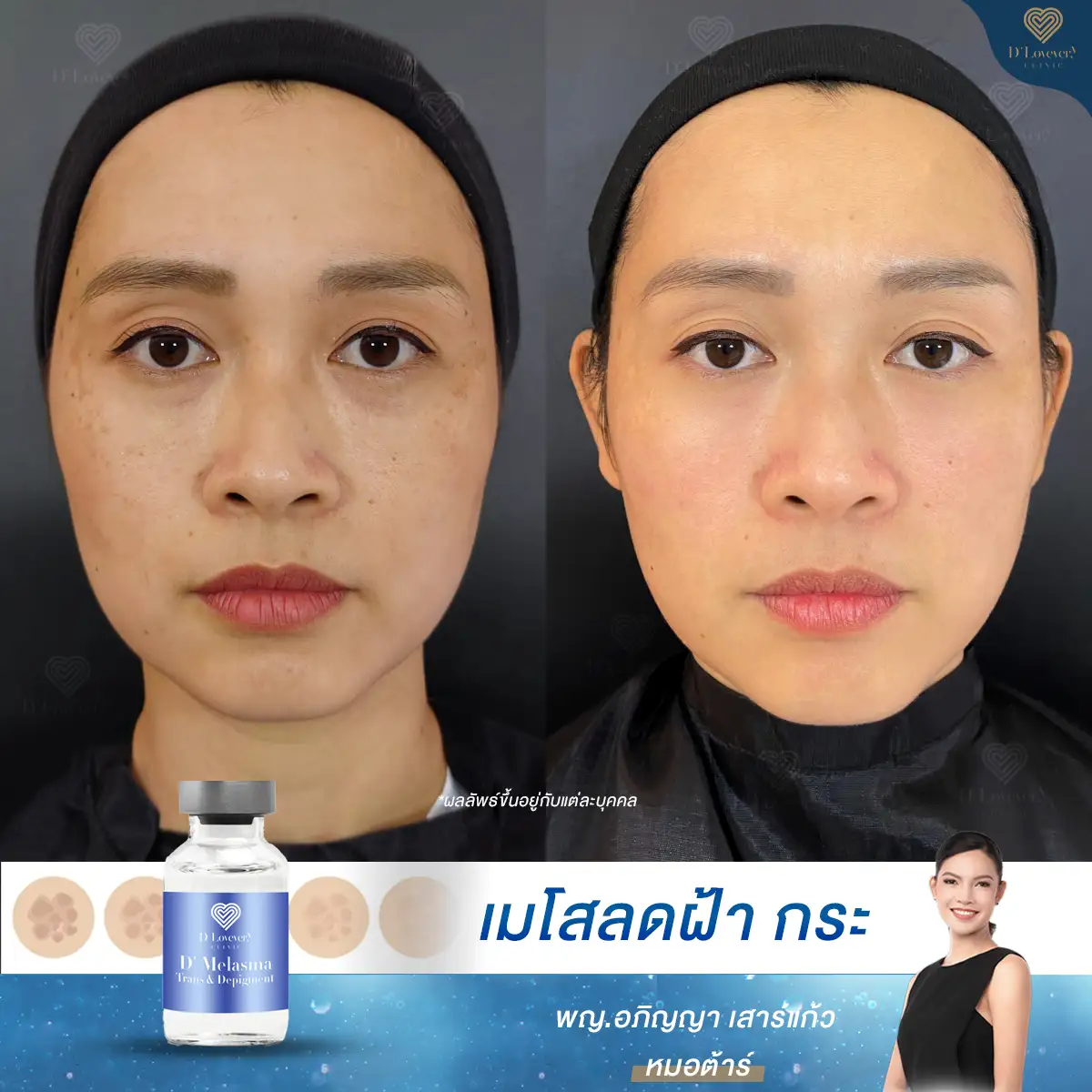
Why choose D' Lovevery Clinic for laser treatment of freckles?
Choosing a reputable and trustworthy clinic is crucial, especially when it comes to laser skin treatments. That's why we are committed to providing you with the best possible experience in every aspect.
- Private and attentive.
At D' Lovevery Clinic, you will receive close and personalized care. Our experienced doctors will provide detailed one-on-one consultations to assess your skin condition and plan the most suitable and effective Pico Laser treatment for you. - Relaxed and free from pressure.
We understand your concerns, which is why we don't have a pushy sales policy or force you to buy unnecessary laser treatment courses. We want you to receive complete information and make a decision with complete peace of mind. - Convenient payment options, choose your preferred method.
We offer a variety of payment options, including deposits, installment plans, and payments via participating credit cards, to make accessing high-quality laser treatments easier. - Continued care by the same doctor.
To ensure your confidence in the results and continuity of your skin care, the doctor treating your laser freckles will closely monitor your progress and provide guidance at every step. - Genuine reviews from real customers.
We take pride in the results of our laser treatments for freckles and have compiled reviews from real customers, not celebrities or influencers, so you can see the true experiences and results from D' Lovevery Clinic. - Highly experienced and verifiable doctors.
Our medical team is highly experienced in treating freckles with Pico Laser, ensuring your utmost confidence. - A standard clinic with convenient transportation.
D' Lovevery Clinic is certified and offers a clean, safe, and conveniently located environment with ample parking for your peace of mind. - Transparent and verifiable.
We prioritize transparency. All products and equipment used for laser treatment are FDA-approved in Thailand and verifiable, ensuring safety and the best possible results for you.

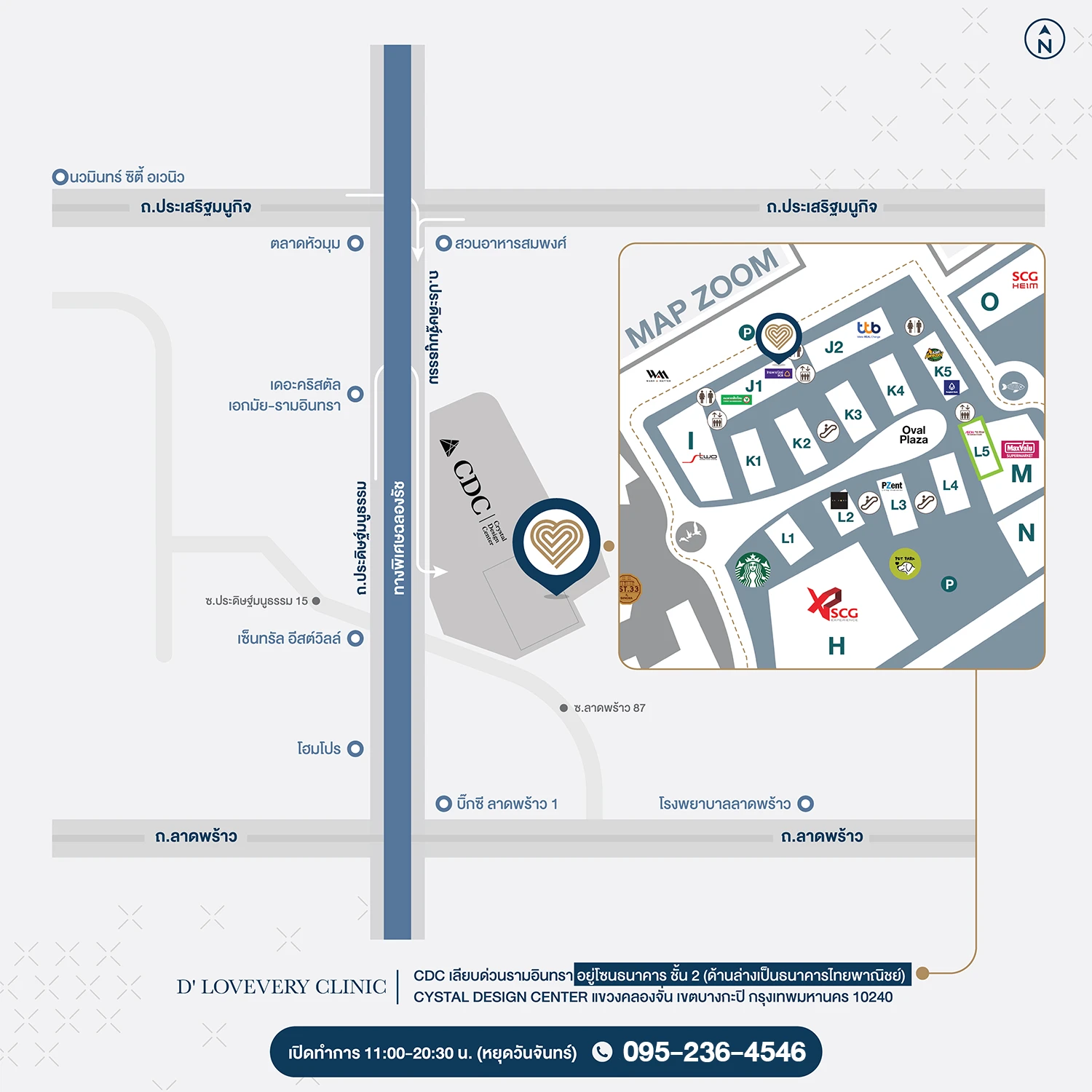
D' Lovevery Clinic We provide services at 2 branches.

I must say that the patient who asked me this question has melasma throughout their family; the mother has it, and the children are starting to get it. Melasma on the face can be caused by many factors, including... congenital This often results in a higher chance of developing freckles, as well as changes in... hormone Sunlight and chemicals.
The melasma you see now may have resulted from your mother using skincare products containing older chemical ingredients (such as mercury, high concentrations of hydroquinone, or steroids in creams) during her teenage years. This could have long-term effects that persist today because some of these creams can thin the skin excessively. (If anyone has ever met someone close to them who used old-fashioned anti-blemish creams, they'll notice their skin has a slightly pinkish tint, and many people are happy thinking their skin looks clearer.) In reality, it's an effect that increases the chances of triggering melasma when repeatedly exposed to sunlight, making it appear darker. This also has the side effect of weakening the skin in the long run.
However, this doesn't mean your mother's melasma is caused solely by creams. Genetic factors also play a significant role. This is why some people treat melasma faster, while others require more time and consistency.
Removing skin tags or moles actually doesn't take long at all. In cases where the affected area is not extensive or is small, the patient may feel almost no pain, just a slight prickling sensation. And the actual process takes only about 1-5 minutes. However, for those who have never had laser treatment before or feel scared, the doctor can apply a numbing cream free of charge. You will just need to wait for the cream to take effect, which takes about 30-45 minutes, making the entire process longer than immediate laser treatment.
For some people who need to have multiple cauterization points, or the entire face, neck, or back, the treatment time will increase depending on the number of points being treated. However, the doctor understands that patients are afraid of pain, so applying a numbing cream is a good option to provide greater peace of mind. You can see an example in the video clip.
The clinic charges per point. 500 THB per point If you have a large quantity, we offer a discounted price. Starting at 10,000 THB. It might be more than this, depending on the quantity. You can send pictures for an estimate.
- Rent the upper half of the back for 10,000 THB.
- Lower half of the back: 10,000 THB
- The whole house is now 18,000 THB.
The skin tag on your back that you asked about is medically known as a "skin tag" or "acrochordon." The main causes are...
- Frequent friction of the skin in that area.
- Hormonal changes, especially during pregnancy.
- heredity
- Overweight or obesity.
- Increasing age
It is most commonly found in people aged 40 and older, but it can occur at any age, especially in those who are overweight or have a family history of the condition.
Regarding the question of... Pico laser What skin problems can it help with? It can comprehensively treat a wide range of skin lesions, including:
- Regarding pigmentation: Helps reduce Melasma, freckles, dark spots Both superficial and deep cleansing properties help to even out skin tone and brighten the complexion.
- Regarding acne scars: It can handle both. Dark spots and red marks from acne. Restores skin's smoothness.
- About Tattoos: สามารถ sri lanka It can be faded.
- Regarding skin quality: help Smoothes and refines skin texture. Tighten pores Make it smaller.
Regarding the question of how many sessions are needed for each problem, generally the number of sessions depends on the skin condition and the doctor's assessment. You need to send pictures for the doctor to evaluate, or schedule a consultation, in order to provide the most accurate advice.
Many patients are shocked by this, because they always use sunscreen regularly, rarely get strong sun exposure, and no one in their family has thick melasma. But as soon as they have children, suddenly their faces are covered in melasma. The doctor has the answer.
Postpartum melasma Also known as Melasma Gravidarum is caused by a condition... Estrogen and progesterone hormones In the body, increases in melanin levels during pregnancy stimulate melanin-producing cells to work abnormally hard, combined with skin aging. Photosensitivity More often, this can cause brown patches to appear on the face, even if there was never any prior melasma. This type of melasma usually... It will fade on its own within a few months. After hormone levels return to normal, it is necessary to... Apply sunscreen diligently. And avoid stress to prevent melasma from becoming permanently embedded.
Patients with melasma, freckles, and acne scars. Both treatments can be done simultaneously in one session. Yes, the doctor will design a treatment plan based on the actual skin condition. If a case involves sensitive skin, or... Ceilings are sensitive to heat. The doctor will avoid directly lasering the melasma, but will instead use... Pico Laser Clear only the freckles and acne scars, then use this method. Injection program D’ Melasma (price 4,500.- Per session or a complete course for great value. 18,000.- / 5 times) to deliver the medication to reduce melasma and dark spots at their source. This combination method will help... Melasma can be faded more safely. It doesn't risk thinning your skin and solves all your skin problems at once.
Brown spots on the stomach and around the waist are most often... Seborrheic keratosis This is caused by genetics and increasing skin aging. They are usually harmless and do not become cancerous. Yes, the population aged 50 and above is larger. 80-90% will start to develop skin tags (Seborrheic Keratosis). At least one spot on the body, and the number increases with age.
Observable characteristics The surface will look It's slightly rough, as if someone had stuck modeling clay on it. Or some spots may appear smooth, ranging from light to dark brown. There's no need to remove them as they're under clothing, but if you're really concerned, you can consult a doctor. Removal is usually done using a laser. CO2 Laser Yes
- Do not pick, scratch, or pull at the scab. * Scab formation is a natural healing process of the body. Picking, scratching, or pulling off the scab prematurely will delay healing, increase the risk of infection, and may result in scarring.
- Keep the wound dry for the first 24-48 hours. * Afterwards, the untreated area can be washed with clean water and mild soap. The cauterized area should be washed as gently as possible.
- Avoid applying makeup, cream, or touching the wound unnecessarily. * Chemicals from cosmetics or bacteria from unclean hands can cause wounds to become infected.
- Apply moisturizer or take medication strictly as prescribed by your doctor. * Generally, doctors will prescribe a scar cream to apply after the scab falls off to prevent dark marks.
- Avoid direct sunlight. * You should apply sunscreen with an SPF of 30 or higher and wear a hat or use an umbrella whenever you go out in the sun to prevent post-healing dark spots.