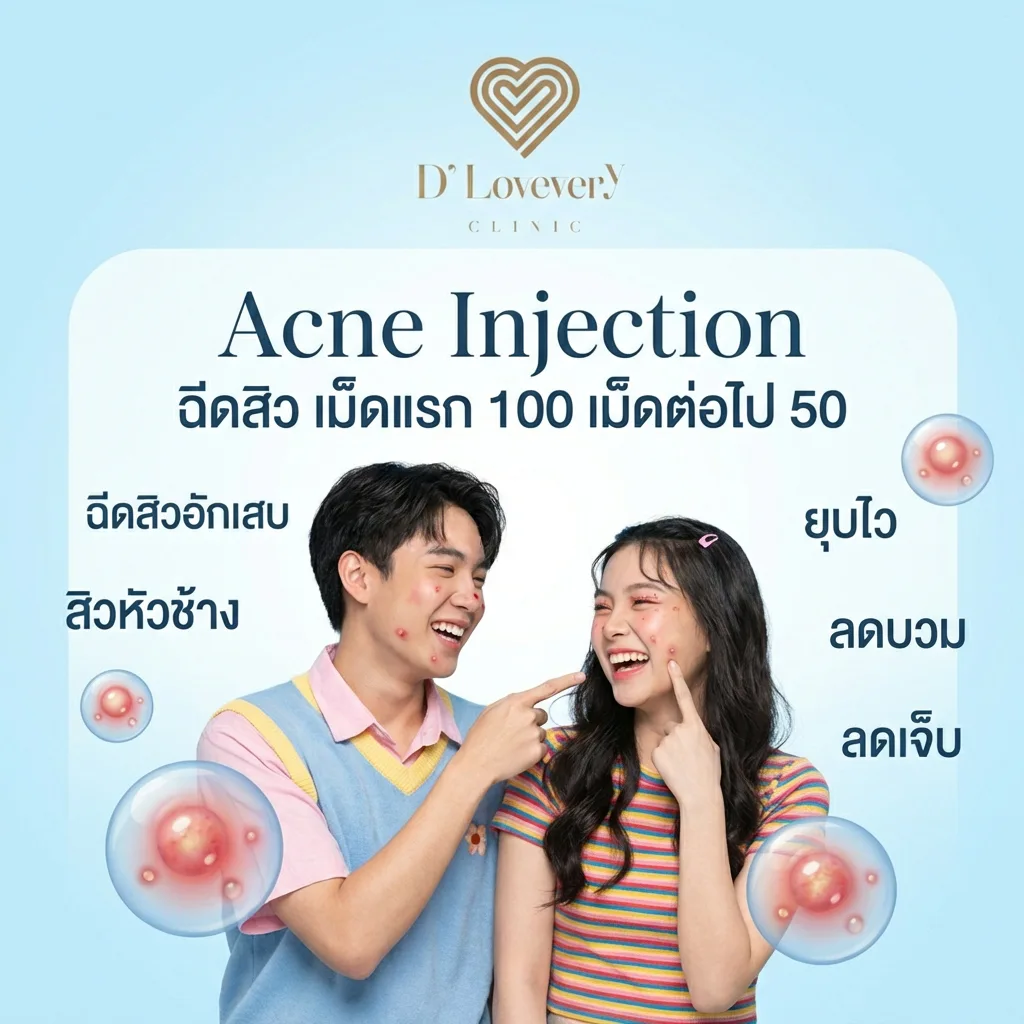
Has anyone ever squeezed a pimple today and woken up the next morning to find several more inflamed ones nearby? I sympathize with everyone who experiences this, because seeing a pimple makes you really want to squeeze it. But squeezing pimples is like picking at a wound that contains bacteria inside.
What happens when we squeeze a pimple?
- Our hands already have bacteria on them, and when we squeeze a pimple, more bacteria will enter the pores.
- Applying too much pressure can cause the pus sac to rupture, and the bacteria will spread to the surrounding area.
- The surrounding skin will also be bruised, causing more inflammation and redness.
Let's try to understand a little bit about why the inflammation persists:
- Even when pimples are squeezed, it still causes injury to the skin.
- Our bodies respond to wounds through an inflammatory process, which is normal.
- Sometimes bacteria can remain in the pores even after they seem to be completely emptied by squeezing them out.


![[Acne Treatment Review] Hormonal acne or mask-induced acne? Solve all problems with effective results and no recurring issues, because the doctor wants everyone to recover.](https://dloveveryclinic.com/storage/2025/11/case-128-d-acne-size-L-dlovevery-clinic-8.webp)
![[Acne Scar Removal Review] I used to have clear skin, but then a severe acne breakout left me feeling discouraged. This review shows how I rescued my damaged skin and got it back to its best with 3 programs from Dr. Tar.D' Lovevery Clinic](https://dloveveryclinic.com/storage/2025/11/case-127-meso-program-dlovevery-2.webp)
![[Acne Treatment Review] "Milia" attack! Clear it up with D' Facial's complete treatment formula. A must-try for sensitive skin!](https://dloveveryclinic.com/storage/2025/11/case-126-d-facial-treatment-before-after-1.webp)