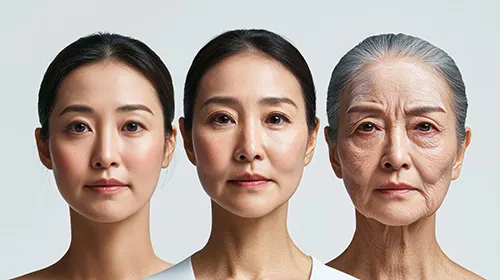

How can you tell if you have facial scarring?
- I can feel around a bit myself.
- When you touch your skin, you may feel a "small, hard lump that doesn't move with the skin."
- It feels unusually taut when pressed; the surface is not as elastic as the side that was not injected/had threads lifted.
- Observe the changes in facial shape.
- You may notice stiffness in your smile, slight facial asymmetry, or areas of skin that are "indented or abnormally curved."
- When you roll the muscles under the skin, some parts will get stuck and won't move.
- Abnormal symptoms appeared after a very long time had passed.
- A common problem doctors encounter is, "I never realized it was related to old injections I had. My face looked fine back then, but after 10-20 years, it started to change."
- Consult with a doctor.
- In some cases, a palpation by a skilled physician is required, or ultrasound may be used to assess the structures beneath the skin, which is the most accurate method.
- The doctor will check to see if it's real scar tissue, old filler, or foreign tissue.
Why is this happening so often in this group?
- สมัยก่อน Fillers Most are "liquid substances" (liquid silicone, polyacrylamide gel, etc.) that are unsafe and leave permanent residues.
- trend Gold thread/dissolvable thread lifting There is no fixed number; many cases have over a hundred strands.
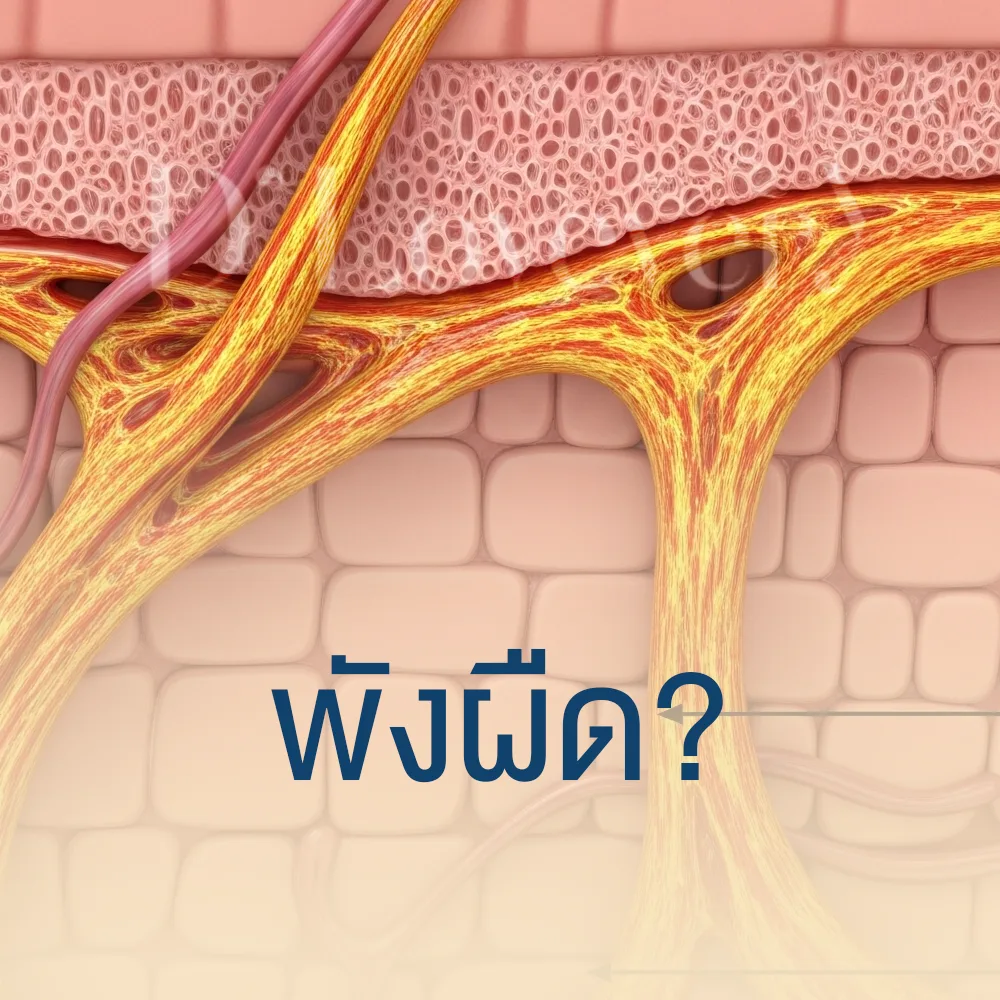
- As time passed... Skin structure changes with age. And those substances create "scar tissue"—hardened scars—under the skin.
- Currently, patients may begin to feel "a strange tightness in their face, lumps or hard lines when pressed, an uncomfortable smile, and areas of skin that feel hard as if something is embedded or indented."
Many people gradually realize that their face looks unnatural, but they aren't sure why. The biggest problem for this group of patients is that getting any procedures done these days is difficult. Their skin may not respond, the results may be minimal or ineffective, or doctors may not recommend certain procedures.
How can I get rid of scar tissue?
- Scar tissue from fluid or old silk. This procedure is more difficult to perform than current methods because the foreign substance and sutures remain embedded in the tissue for a very long time. The surrounding scar tissue becomes thick and hard. It may require multiple steps and a combination of techniques, such as dissolving injections, minor surgery, and laser treatment.
- If left for too long. The scar tissue will harden, adhering to the facial structure and causing deformity, making treatment difficult or potentially preventing a 100% restoration to the original state.
- Do not massage vigorously or use stimulating devices yourself. Because it will cause the scar tissue to thicken.
Big problem!
The biggest problem for this group of patients is that getting any new procedures done these days is very difficult because the skin and deep tissues don't respond normally. Recovery is slow, the results are minimal, or the doctor may not even recommend some procedures at all.
The reason is that the formed scar tissue makes the tissue inflexible, pulling on blood vessels and other systems. This hinders the distribution of fillers/medications/new threads, and laser treatment also carries the risk of scarring.
Therefore, this group requires careful individual assessment and treatment planning. It may be necessary to address the scar tissue first, or modify the procedure to something more suitable for the current skin condition.