
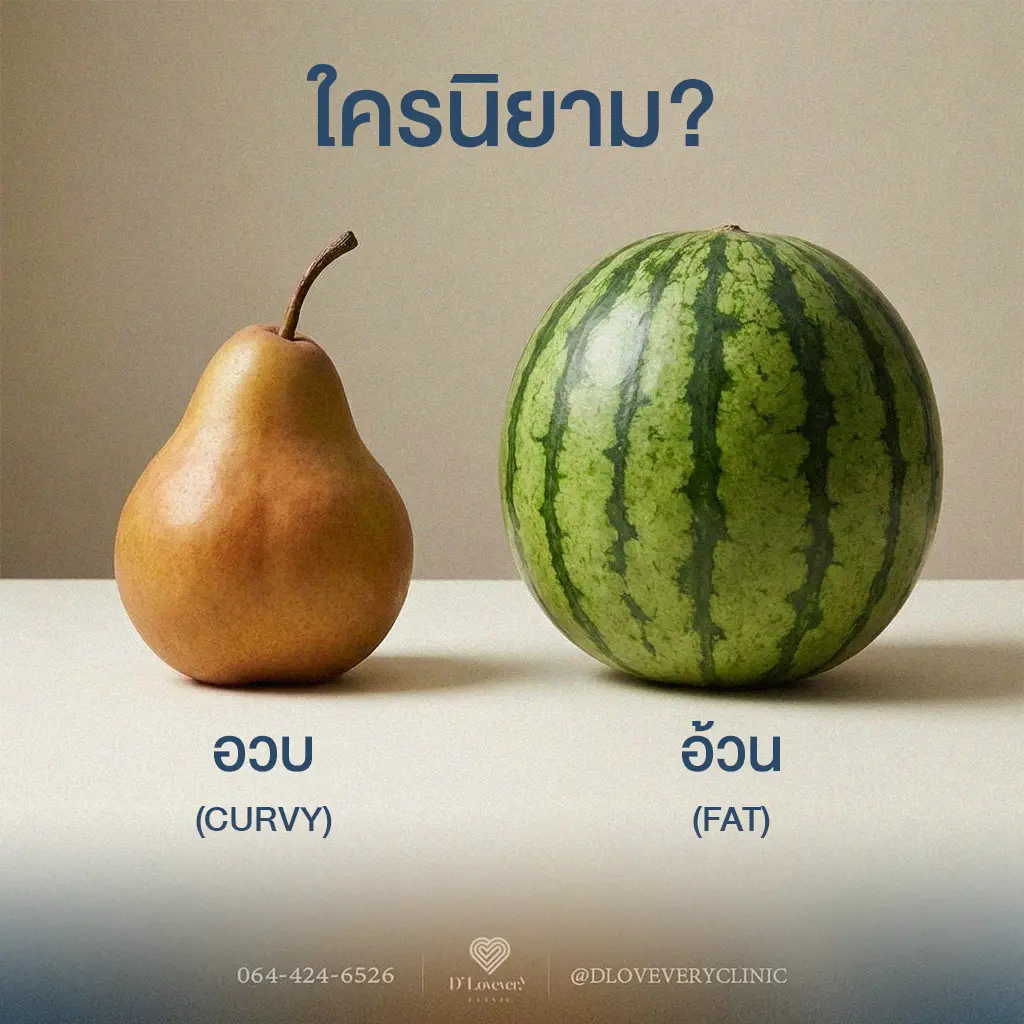
Let's understand this first... "Chubby" and "Fat" aren't just words.
From a medical and aesthetic perspective, the terms "chubby" and "obese" are not just general descriptions of body shape; they have different meanings and connotations. While we may sometimes use them interchangeably, understanding their true meaning can help patients manage their health effectively and achieve better well-being.
What does "chubby" mean?
Regarding the word... "chubby" Patients should imagine a slightly curvier or fuller figure. They might look more plump, and clothes might feel slightly tighter, but overall, they should still be able to move comfortably, without experiencing unusual fatigue or any significant long-term health effects. In medical terms, this is often categorized as... "Overweight" This refers to the Body Mass Index (BMI). BMI (Body Mass Index) The typical body weight range for Asians is 23.0 – 24.9 kg/m². Some patients may feel "chubby" because they want to fit into clothes more flatteringly or feel they have a little excess fat accumulated in certain areas, which is perfectly normal.
example: Some patients may feel that they are "a little chubby" because their usual clothing size feels slightly tighter, or they have cute-looking cheeks, but they can still perform daily activities normally without experiencing any unusual illness or fatigue.

And what about "fat"? How does it have different meanings?
Now we come to the word... "fat" Okay, but scientifically speaking, this word has a much more serious meaning. In medical terms, "obese" refers to... "A condition in which there is excessive and unhealthy accumulation of body fat." Or what we call... "Obesity" That's right. This can be seen from the BMI value, which starts from... 25.0 kg/m² or higher for Asians. Or it could be due to a body fat percentage that is higher than normal.
Obesity isn't just about physical appearance; it's linked to several serious health problems, such as: Diabetes, high blood pressure, cardiovascular disease, osteoarthritis, and even increased risk of certain types of cancer. Yes, that's correct.
example: The doctor has many patients who come for consultation regarding their weight, with a BMI over 25, and who are starting to experience knee pain, or who are found to have high blood sugar. These are what we call... "Obesity" So, in this case, weight loss isn't just about aesthetics, but also about the patient's long-term health and quality of life.
Is weight really the only deciding factor?
The answer is Weight alone can't tell the whole story! Some patients may have the same weight but completely different body shapes and health. This is because we need to consider... "Body Composition" Yes, that's right.
Body composition tells us what components make up our total body weight, such as: Fat mass, muscle mass, and bone mass. Yes, if the patient is overweight because of... Lots of muscle (For example, people who exercise intensely) will have a toned, firm, and healthy physique. But if they are overweight because of... Lots of accumulated body fat. Even with the same weight, one person may appear larger and experience more health problems. Therefore, measuring body fat percentage is another important indicator, just as crucial as BMI.