
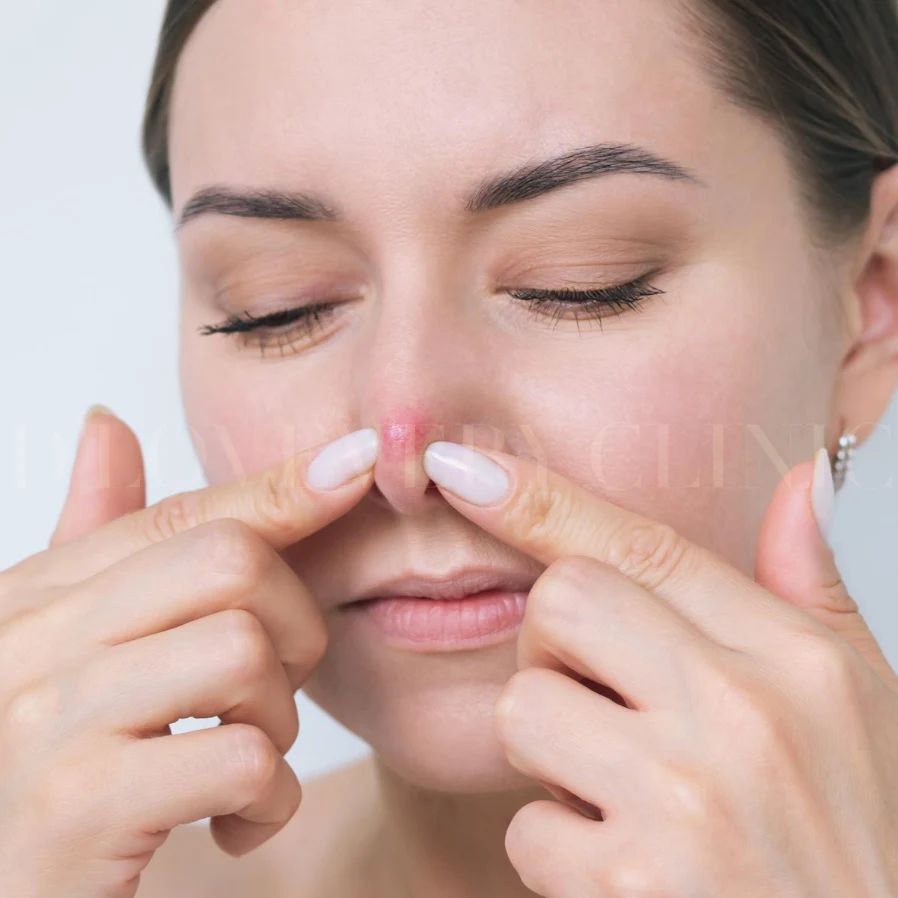

Is it okay to squeeze a pimple on my nose?
The doctor strongly advises against squeezing or pressing pimples, as this can worsen inflammation or, even worse, lead to scarring, especially on the prominent nose area. We don't want to risk getting a scar there, do we?
What should I do about a large, inflamed pimple on my nose?
This is the initial recommendation from the doctor.
- Cold compress: Use a clean cloth soaked in cold water or wrap ice in a cloth and gently apply it to the affected area. This can help reduce inflammation.
- Topical medication: Try applying a topical medication containing benzoyl peroxide or salicylic acid gently to the affected area. This can help reduce inflammation and kill bacteria.
- Acne patches: There are acne patches that contain medication to help absorb pus and reduce inflammation effectively.
- Get enough rest: Getting enough sleep allows your body to repair itself better and also reduces stress, which can worsen acne.
If acne on your nose won't go away or subside, when should you see a doctor?
- Acne does not improve after 4-6 weeks of self-treatment.
- Acne is spreading or getting worse.
- Severe acne (such as cystic acne or severe pustular acne).
- Acne affects self-confidence and quality of life.
- I experienced an allergic reaction or irritation from acne treatment products.
Finally, remember to always keep your face clean. Wash your face gently twice a day, use products suitable for your skin type, and try to avoid touching your nose frequently.
![[Acne Treatment Review] Hormonal acne or mask-induced acne? Solve all problems with effective results and no recurring issues, because the doctor wants everyone to recover.](https://dloveveryclinic.com/storage/2025/11/case-128-d-acne-size-L-dlovevery-clinic-8.webp)
![[Acne Scar Removal Review] I used to have clear skin, but then a severe acne breakout left me feeling discouraged. This review shows how I rescued my damaged skin and got it back to its best with 3 programs from Dr. Tar.D' Lovevery Clinic](https://dloveveryclinic.com/storage/2025/11/case-127-meso-program-dlovevery-2.webp)
![[Acne Treatment Review] "Milia" attack! Clear it up with D' Facial's complete treatment formula. A must-try for sensitive skin!](https://dloveveryclinic.com/storage/2025/11/case-126-d-facial-treatment-before-after-1.webp)